- agents
- AI
- ambiguity
- architecture
- augmented reality
- books
- bureaucracy
- career
- change
- Christmas
- cloud
- collaboration
- communication
- compliance
- corporate life
- data
- decisions
- delivery
- devops
- disagreement
- end user tools
- ethics
- failure
- fear
- fundamentals
- government
- halloween
- history
- humans
- hype
- identity
- inclusion
- infrastructure
- innovation
- language
- leadership
- learning
- legacy
- management
- measurement
- mental health
- money
- networking
- New Year
- operations
- philosophy
- physics
- platforms
- prediction
- privacy
- process
- procurement
- products
- programming
- quantum
- reliability
- resilience
- risk
- science fiction
- security
- shadow IT
- space
- strategy
- talent
- teaching
- teams
- technical debt
- technology advocacy
- testing
- thinking
- transformation
- TV
- virtues
- vision
- writing

Technology architects aren't vampires: they don't need to be invited in
Vampires are puzzling. They have all sorts of rules which help make dramatic stories and films, but which don’t make much sense if you stop to think about them. For example, consider the rule that vampires can’t enter a house unless they have been invited in. Does it matter if the inviter lives at the house or not? What if the vampire receives a party invitation in the post? Is it okay if they are the +1 rather than invitee? Does a ‘Welcome’ mat work? It’s probably best for us not to ask too many questions, but just to accept the rules and enjoy the story. Oh no! The protagonist has blithely invited the monster in for a cup of tea!
However, while this seems strange in fiction, we often encounter its equivalent in real life, especially if we work in the technology department.

Exercise your mind, body . . . and code
I had two humbling experiences last week.
First, I returned from a two week holiday which I enjoyed greatly - but did very little exercise other than walking. When I resumed my normal exercise regime - nothing too strenuous, but something every day - I was surprised that I found it so hard, and why I felt increasingly stiff and sore as the week progressed. It was a reminder of how quickly you can lose good habits, and how quickly their effects fade.
Second, I did some work on a personal coding project which I hadn’t touched for a few months. I went through the normal experience of being baffled by my own code, before gradually remembering the concepts and structures (and, as usual, puzzling at some of the coding choices I made several years ago). I then tried to make some changes and run the deployment pipeline - and everything crashed. I made some more changes, and everything crashed again. And again.

Adventures in ignorance
Nobody knows anything.
That’s the number one rule in Adventures in the Screen Trade, the book by the late screenwriter and author William Goldman (Butch Cassidy and the Sundance Kid, Marathon Man, All the President’s Men and The Princess Bride, amongst many others). Goldman’s insight was that, even though the film industry was getting on for a century old when he was writing in 1996, no-one had been able to figure out what would be a hit and what would be a flop. Nearly thirty years later, it appears that it’s still true that nobody knows anything: despite algorithmic targeting, despite new ways of reaching audiences and measuring their reactions, it is still possible for juggernaut franchises to stutter and stumble, while unknown newcomers charm and delight.

Worry about the dumb machines as well as the smart ones
We have been warned about the dangers of intelligent machines for over 150 years. In his satirical novel Erewhon by Samuel Butler, published in 1872, the protagonist visits a mythical country where machines have been outlawed. The novel quotes the fictional Book of Machines, the supposed trigger for a civil war between ‘machinists’ and ‘non-machinists’: I fear none of the existing machines; what I fear is the extraordinary rapidity with which they are becoming something very different to what they are at present. No class of beings have in any time past made so rapid a movement forward.

There's always a bigger goat: don't let big problems stop you solving smaller problems
In the story of the three billy goats gruff, the goats want to cross a bridge guarded by a troll. They manage this by each telling the troll that there is a bigger goat just behind them until (spoiler alert!) the biggest goat comes along and butts the troll into the sky.
Sometimes, when we are trying to make the case for enterprise technology capabilities, it feels like we are the trolls, and that we are so scared of the biggest billy goat that we won’t tackle the smaller goats. When we look across our technology landscapes, we see mess, waste and mayhem, and wish that we had some of the foundational capabilities that would help clean things up. Yet we hesitate, because we know that every time we build something we will uncover another problem, and another problem, and another problem, until we get to problems that are so big that we cannot imagine how to solve them.

Which are more dangerous: slides, or sticky notes?
In the story of the three billy goats gruff, the goats want to cross a bridge guarded by a troll. They manage this by each telling the troll that there is a bigger goat just behind them until (spoiler alert!) the biggest goat comes along and butts the troll into the sky.
Sometimes, when we are trying to make the case for enterprise technology capabilities, it feels like we are the trolls, and that we are so scared of the biggest billy goat that we won’t tackle the smaller goats. When we look across our technology landscapes, we see mess, waste and mayhem, and wish that we had some of the foundational capabilities that would help clean things up. Yet we hesitate, because we know that every time we build something we will uncover another problem, and another problem, and another problem, until we get to problems that are so big that we cannot imagine how to solve them.

The language illusion, doubled
Is programming a computer more like language or more like maths?
Neither, it turns out. In recent research, neuroscientists at MIT conducted brain scans of programmers while they were trying to solve problems, and discovered that, rather than engaging the language centres of the brain, they engaged a system known as the multiple demand network, usually used for complex problem solving.
Programming languages, it seems, are not the same as ordinary languages. This is not new news. In the earliest days of programming, when Grace Hopper was inventing high level languages, she and her team sent versions of their code to their bosses in French and German. The bosses sat up and paid attention: was it possible that their computers had suddenly learnt to speak foreign languages?

Technologists are always crying wolf (because of all the wolves)
The computer had failed. Unfortunately, it was the Apollo Guidance Computer (AGC), the machine that controlled the flight of a small, fragile spacecraft to the Moon and back. Fortunately, it wasn’t in space: it was on the ground, in a simulator.
Margaret Hamilton, the leader of the MIT team programming the AGC, often had to work weekends to meet the urgent schedule of the Apollo programme, and sometimes brought her daughter, Lauren, to work with her. Lauren liked to play in the simulator.

Coping with volatility: don't panic; seek truth; release frequently
If you’re in the last stages of a multi-year digital delivery programme, then you probably feel frazzled. That’s the normal condition of late stage programme teams. If your programme has coincided with the last five years (five year digital delivery programmes are still a thing) then you must feel frazzled to a historic degree.

It’s more complicated on the inside than it is on the outside
We don’t need time machines to create paradoxes in technology: they are built into the way we work. One of these paradoxes is that the simpler technology appears on the outside, the more complicated it is on the inside.
I was reminded of this recently when talking to someone who confidently told me that the more sophisticated AI models get, the easier they will be to use, for technologists as well as end users. AI would solve its own skills problem. I was surprised by this because, to me (and, I expect to most other technologists), while we understand how natural language interfaces can radically simplify the experience for end users, the introduction of the current wave of AI into our architecture makes it more complicated.

Learn to fail fast? Technologists fail all the time
From time to time, organisations attempt to learn new ways of working. They attempt to become digital or agile or data-driven or innovative. These attempts come with some familiar ideas: that we should execute through cross-functional teams who are empowered to experiment. One of these ideas is that we should not be scared of failure, and that we should learn to fail fast.
These attempts sometimes elicit eye rolls from the technology teams, especially the idea that we should embrace failure. This is not because these ideas are invalid: in fact, they are welcome to technology teams, and reflect their preferred ways of working. However, technologists have a different relationship with failure than non-technologists.
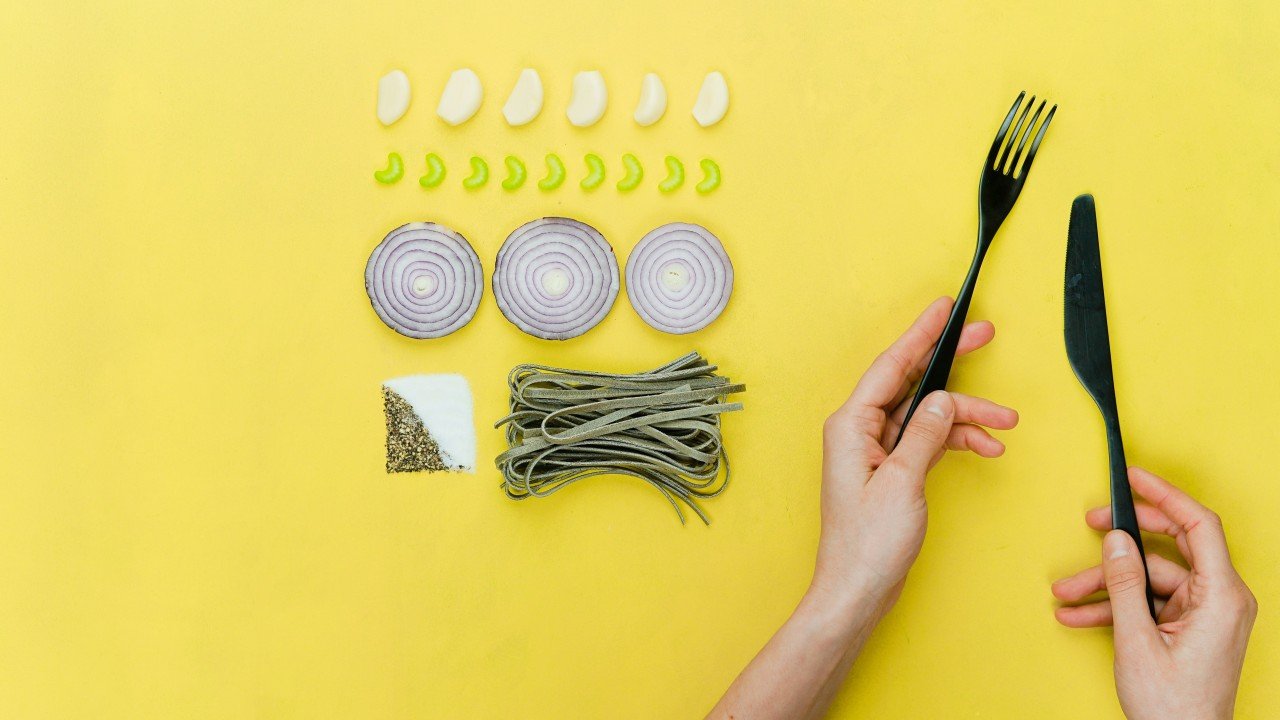
Are LLMs the air fryers of AI?
Do you know someone who got an air fryer for Christmas? Or did you get one yourself?
If you know someone who got an air fryer, then there’s a high chance that you have heard all about it, and how it has been a complete game changer. They can cook things in a fraction of the time it used to take! And it’s not a fryer at all - it’s really a mini-oven! If you got an air fryer yourself, then there’s a chance that you’ve used it for everything, and that, even now, you are thinking about what you could use it to cook next.
I don’t have an air fryer myself, but am old enough to remember when my family first got a microwave. We lived off jacket potatoes for at least a week, and tried microwaving many things that should not be microwaved (there’s a reason that roasts are called roasts). Eventually, we found, just as my friends with air fryers seem to be finding in the weeks after Christmas, that, while the microwave is a useful tool to have in the kitchen, it’s not the only answer, and certainly not the best answer for everything.