- agents
- AI
- APIs
- architecture
- augmented reality
- books
- bureaucracy
- career
- change
- Christmas
- cloud
- collaboration
- communication
- complexity
- computer history
- corporate life
- data
- decisions
- delivery
- devops
- end user tools
- ethics
- failure
- fear
- fundamentals
- gaming
- government
- history
- humans
- hype
- identity
- infrastructure
- innovation
- language
- leadership
- learning
- legacy
- management
- measurement
- mental health
- money
- networking
- New Year
- operations
- partnership
- philosophy
- physics
- platforms
- prediction
- process
- procurement
- programming
- quantum
- reliability
- resilience
- risk
- robotics
- science
- science fiction
- security
- shadow IT
- space
- standards
- strategy
- teaching
- teams
- technical debt
- technology advocacy
- testing
- thinking
- transformation
- TV
- virtues
- vision
- writing
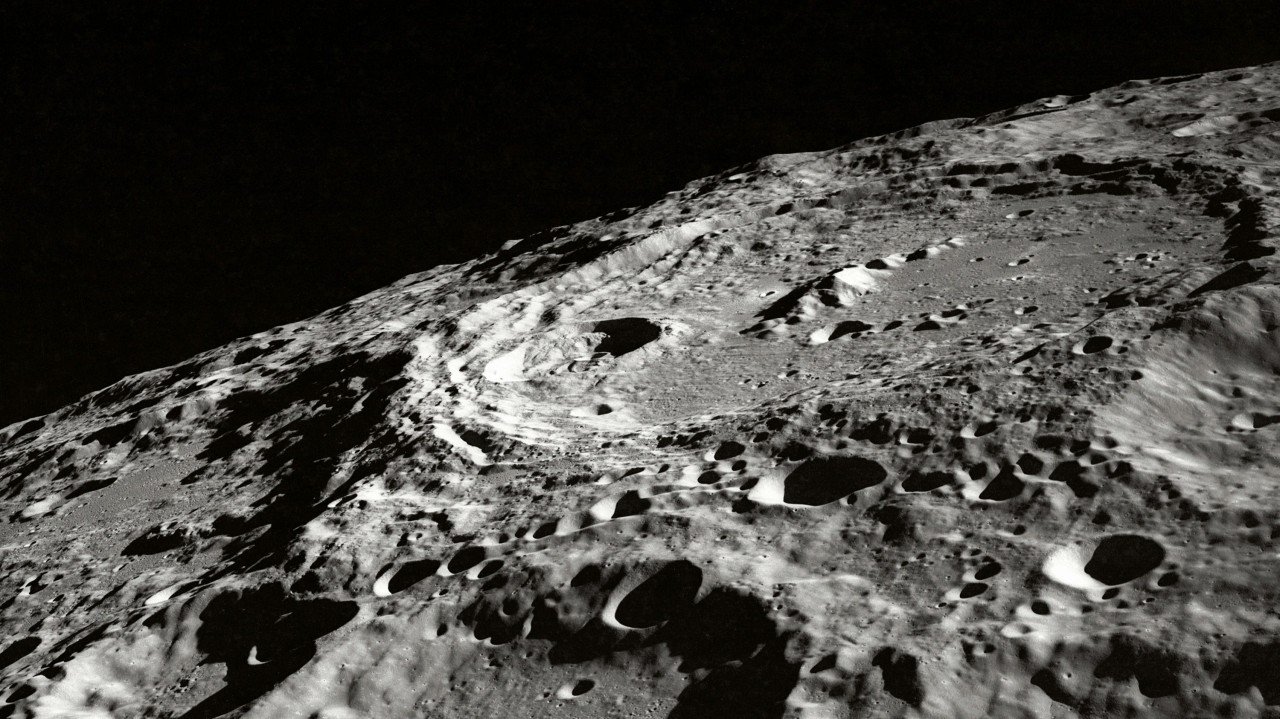
Your Moonshot doesn’t have to be a Moonshot
In 1962, NASA faced a difficult technology procurement choice.
They needed a guidance computer for the Apollo Moon missions. Did they go for a design based on new technology, working with researchers at MIT, or a design based on proven technology from their existing suppliers?
They chose the new technology: rather than discrete electronic transistors, they would use silicon chips, which combined multiple transistors into a single component. These chips weren’t like the chips of today, though: rather than millions or billions of transistors, they contained just a few transistors, each representing a single logic gate. Thousands of them were needed to build the Apollo Guidance Computer (AGC).

Technologists are always crying wolf (because of all the wolves)
The computer had failed. Unfortunately, it was the Apollo Guidance Computer (AGC), the machine that controlled the flight of a small, fragile spacecraft to the Moon and back. Fortunately, it wasn’t in space: it was on the ground, in a simulator.
Margaret Hamilton, the leader of the MIT team programming the AGC, often had to work weekends to meet the urgent schedule of the Apollo programme, and sometimes brought her daughter, Lauren, to work with her. Lauren liked to play in the simulator.
A mishap on Mars
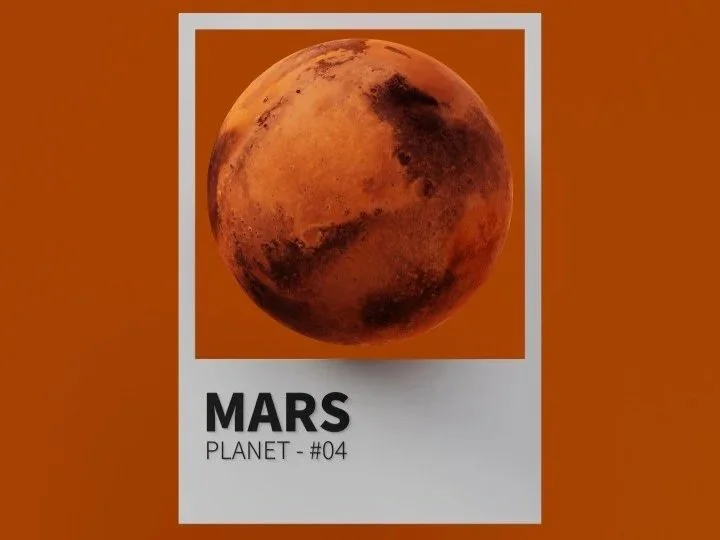
On September 23rd, 1999, the Mars Climate Orbiter fired its thrusters for a manoeuvre that would bring it into a stable orbit 226 kilometres above the Martian surface. From this orbit, it would gather valuable information about weather systems on Mars, as well as acting as the communication relay for subsequent missions. 226 kilometres was a safe height, well above the 80 kilometeres at which the atmosphere would be thick enough to cause problems.
But the manoeuvre went wrong, The Orbiter dropped to an altitude of 57 kilometres, and either burnt up in the atmosphere, or skipped off and flew away from Mars altogether. Whatever happened, it was never heard from again.
The investigation found that the problem was due to a mismatch in the units used by the different systems used to calculate and control the craft’s manouevres. One system was working in pound-force seconds (an Imperial measure), while the other was working in newton-seconds (a metric measure). The ratio between these units is 4.45:1 - no wonder the craft crashed.
Enterprise technology and the mysteries of the universe
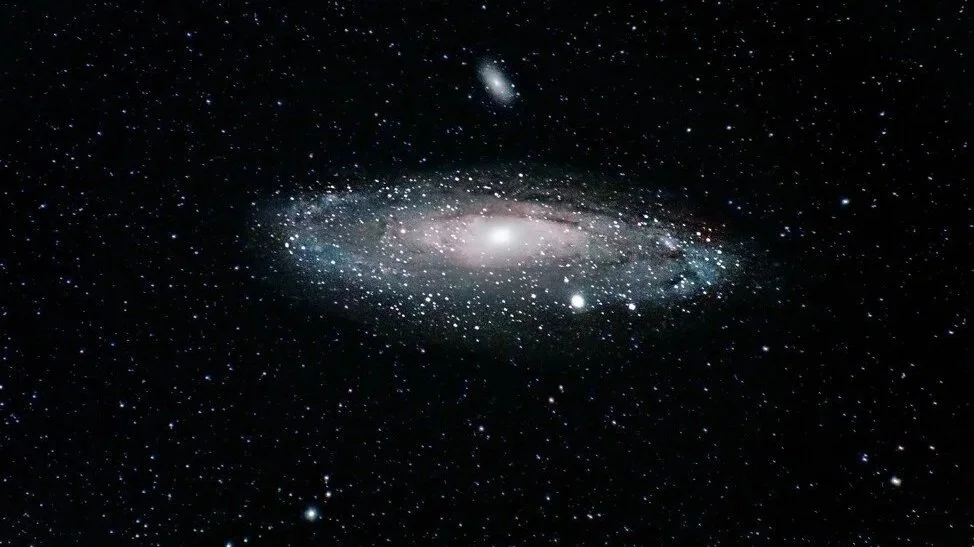
In 1933 our understanding of the universe changed. Fritz Zwicky, a Swiss Astronomer working in California, observed that the Coma cluster of galaxies was rotating so fast that there was simply not enough mass to hold it together. The cluster shouldn’t exist. He termed the phrase ‘dunkle Materie’, or ‘dark matter’, to give a label to the missing mass that must be holding it together through the force of gravity.
It took decades for the concept of dark matter to be accepted more widely, but it is now a part of our standard description of the universe. We still don’t know what dark matter is, but believe that it outweighs normal matter by a factor of more than five to one.
That’s an astonishing thought. Everything that we can see - the Earth, the Sun, the stars, ourselves - makes up only a fraction of the matter that exists in the Universe.
Are you breaking up monoliths or creating rubble piles?
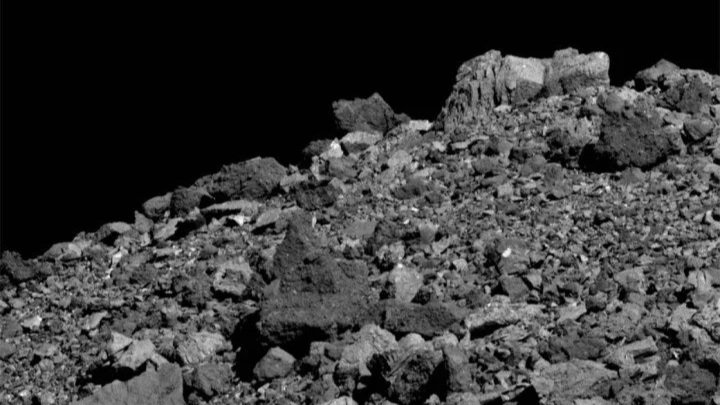
This week I learnt (via the wonderful Skeptics' Guide to the Universe) that asteroids in the solar system come in two varieties: monoliths and rubble piles. These are exactly what they sound like: monoliths are big, singular rocks, while rubble piles are, well, piles of rubble, held together by gravity.
Rubble piles have a couple of interesting properties. First, the oldest asteroids are rubble piles. This makes sense: if a monolith experiences a collision and gets broken up, it may become a rubble pile. But there’s no way for a rock pile to go back to being a monolith. Second, rubble piles are harder to move. If we detect a big monolith heading towards Earth, we may be able to change its trajectory with a single impact. But if we send something up to impact a rubble pile, it might just jiggle around and do nothing to stop it coming towards us.

Do you know the difference between reliability and resilience?
If you want to know the difference between reliability and resilience, look to the Moon. Specifically, look at the two best known Moon missions, Apollo 11 and Apollo 13.
Although Apollo 11 was famously successful, this was almost not the case. In the final minutes of the descent, the guidance computer crashed repeatedly, throwing error after error at the two astronauts, who waited tensely on instructions from Mission Control, and wondered whether to abort the mission.
Later, it was found that the computer was receiving unexpectedly large amounts of data from one of the instruments, overloading its memory and processing capacity. Yet, despite the nerve wracking series of errors, the computer behaved exactly as designed. When overwhelmed, it displayed an error message and restarted itself, giving priority to the most important programmes.
Old is not bad. Are you modernising legacy systems for the right reasons?
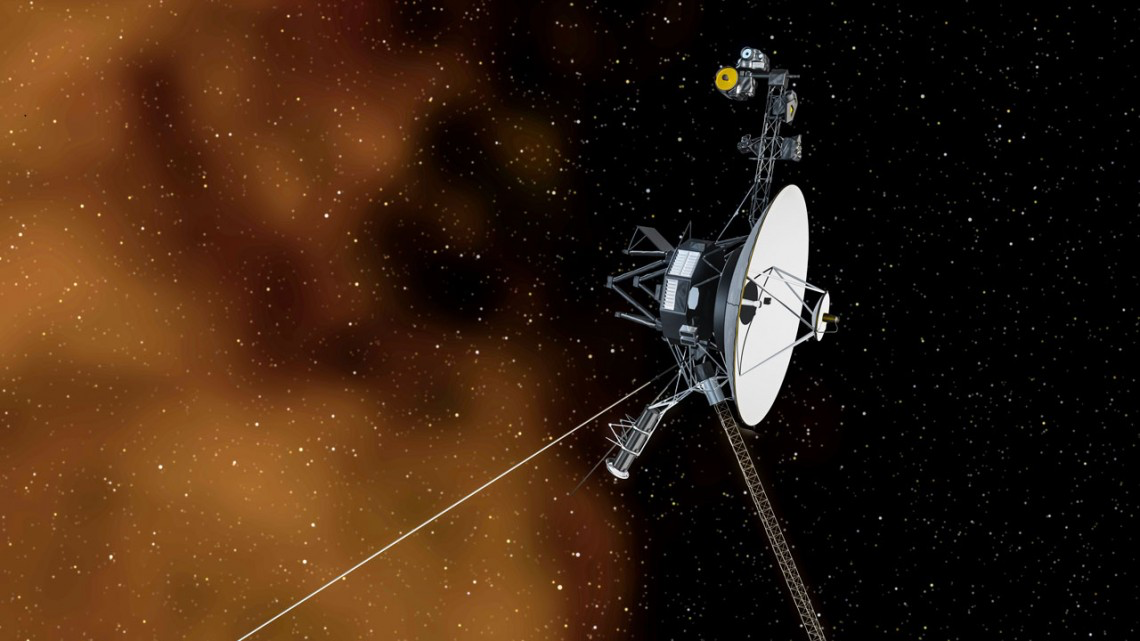
The Voyager 1 spacecraft, launched in 1977, has been flying through space for most of my life, and for longer than many people today have been alive. It was alarming therefore, to read reports that it was being shut down - and reassuring to find that those reports were somewhat exaggerated. Voyager is powered by the radioactive decay of plutonium, and it is starting to run out: power output is 40% less than at launch, so NASA is shutting down some systems to keep others operating into the 2030s.
I was also intrigued to learn that Voyager 1 is currently on its ‘extended mission’. Its original mission, to gather data on the outer planets and moons, was completed in 1980: the extended missions is effectively just . . . keep on going. And Voyager has kept on going for another 42 years and counting.

The secret to great technology architecture is . . . timing
It’s been fascinating and nerve wracking to watch the journey, unfolding and testing of the James Webb Space Telescope since its launch at the end of 2021. Fascinating because, to a non-expert like me, every time I read about it, the mission seems more complicated than I thought it was. Nerve wracking because the telescope is a very, very long way away (at the Lagrange point L2, about one and a half million kilometres from Earth). This means that, if anything goes wrong, there’s no realistic prospect of sending someone (or something) to fix it (unlike Hubble, which has had five shuttle missions for servicing, upgrades and repairs). Anybody who has been involved in any sort of launch, even of software that has never left a machine, let alone left the Earth, knows that ‘just one last thing’ feeling before the point of no return is crossed.
I find the JWST interesting because it is an extreme example of knowing when to make choices about architecture and design. I must admit that I don’t know the full production lifecycle of the JWST, the manufacturing lead times, or the critical path. But I do know that, once the Ariane 5 rocket was lit, there was no going back.

The more you understand, the more you can imagine
In 2022, humanity will explore new horizons. The James Webb space telescope, launched on Christmas Day 2021, has now reached L2, a stable orbital position about 1.5 million kilometres away from Earth. When it is fully working, it will see over 13 billion years into the past, just a few hundred million years after the Big Bang.
If that’s not enough, 2022 is also the year when the Large Hadron Collider reopens, after a multi-year upgrade. The upgrade will allow the LHC to collide particles at higher energies, allowing scientists to explore mysteries within the standard model of physics.
I find these twin explorations, of distant space, and of the fundamental forces of nature, of the very far and the very small, spectacular and inspiring - particularly as they are the work of teams that kept going despite the disruptions of a global pandemic.
Can one voice change a strategy?
The lunar module from the Apollo missions is so familiar that it is hard to imagine other ways of landing on the Moon. Surely that spindly, fragile lander, and the command module in orbit with its lonely pilot are the way that these things are done.
But this way of landing on the Moon was not inevitable: in the early days of Apollo, it was not even seen as an option worthy of consideration. The original plans were for a single craft, capable of landing on the Moon, taking off again and flying all the way home on its own. Such a craft would have no need for a docking manoeuvre in Lunar orbit, which was seen as unnecessary and risky.
And, once we shed our preconceptions based on decades of images, this approach seems intuitively simpler. The Moon missions would already involve many dangerous firsts: why complicate things further by splitting the landing craft and command module, and attempting a docking manoeuvre a quarter of a million miles from home?

If you’re going to land on the Moon, at some point you have to land on the Moon
The recording of the Apollo 11 Moon mission, just before the Eagle lands in the Sea of Tranquility, never fails to make my hair stand up. The tone of the astronauts is matter of fact, calm and professional: if you didn’t know the context then you would never imagine that they were engaged in one of humanity’s greatest endeavours.
And the more of the context you know, the more astonishing that air of calm becomes. Those last minutes before the landing were filled with alarms, unexpected behaviour from the lunar module, an overshoot of the planned landing site, and a search for a favourable place to land. By the time the module touched down, the craft had less than 5% of its fuel left, and was less than thirty seconds away from abandoning the mission. (This page gives a full transcript of the last 13 minutes before landing, and a great commentary on what was going on behind the words.)

Perspective for technology architects: keep thinking bigger
In 1959 the physicist Hugh Everett met with Niels Bohr, one of the pioneers of quantum physics. He wanted to share an idea: that the strange behaviour of quantum particles could be explained by postulating that, every time a particle could be in multiple different states, it existed in all those states, but in different universes. This was an early version of what came to be called the many-worlds theory.
Unfortunately for Everett, the meeting did not go well. That wasn’t a surprise: Everett was trying to convince one of the creators of the Copenhagen interpretation of quantum physics that that interpretation was wrong - and he had even gone to Copenhagen to do it. Everett admitted that the meeting was ‘doomed from the start,’ and he turned out to be right. He could not even establish sufficient common ground to have a meaningful discussion.
Although the idea languished for many year, seventy years later, the many-worlds interpretation is treated as a serious, if controversial, way to describe the universe.