- agents
- AI
- APIs
- architecture
- augmented reality
- books
- bureaucracy
- career
- change
- Christmas
- cloud
- collaboration
- communication
- complexity
- computer history
- corporate life
- data
- decisions
- delivery
- devops
- end user tools
- ethics
- failure
- fear
- fundamentals
- gaming
- government
- history
- humans
- hype
- identity
- infrastructure
- innovation
- language
- leadership
- learning
- legacy
- management
- measurement
- mental health
- money
- networking
- New Year
- operations
- partnership
- philosophy
- physics
- platforms
- prediction
- process
- procurement
- programming
- quantum
- reliability
- resilience
- risk
- robotics
- science
- science fiction
- security
- shadow IT
- space
- standards
- strategy
- teaching
- teams
- technical debt
- technology advocacy
- testing
- thinking
- transformation
- TV
- virtues
- vision
- writing
The round trip question: if you want to understand the world, learn to code
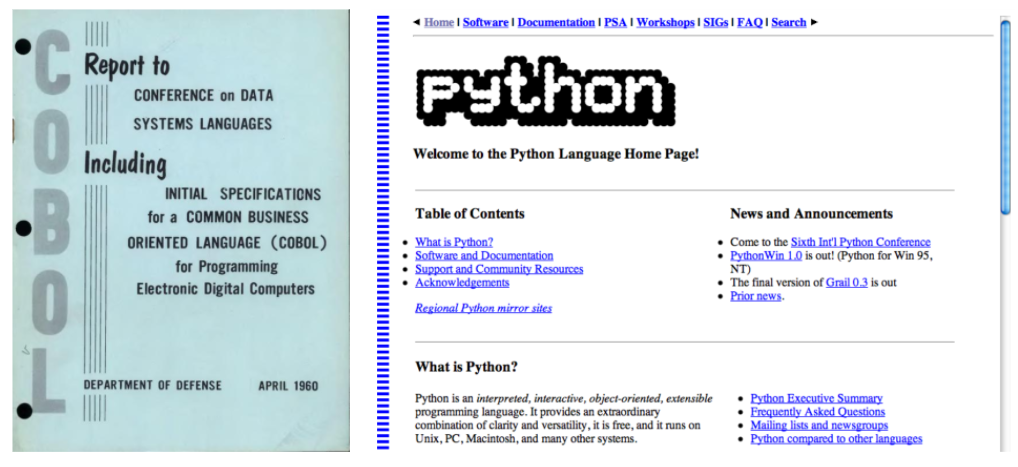
COBOL turned 60 in 2019. Happy birthday COBOL! Python turned 30 this year. Happy birthday Python!
If you work in a large company, you have probably heard of COBOL - often in hushed tones, referring to ancient, giant systems that are held in a special facility somewhere out of sight, tended to by people steeped in ancient wisdom. You may also have heard people speak about Python, often in excited tones, referring to new disciplines such as data science and machine learning, exercised by smart new people fresh out of college.
The comparative age of COBOL and Python may be surprising to anyone who has never had the chance to write code: COBOL is older than Python, but they are both so old that they have been around longer than most people today have been working. If you do write code then you know that, while they may have significant differences, at root these languages are more similar than they are different. They both use the same logical constructs to manipulate data.
The round trip question: what is a computer?
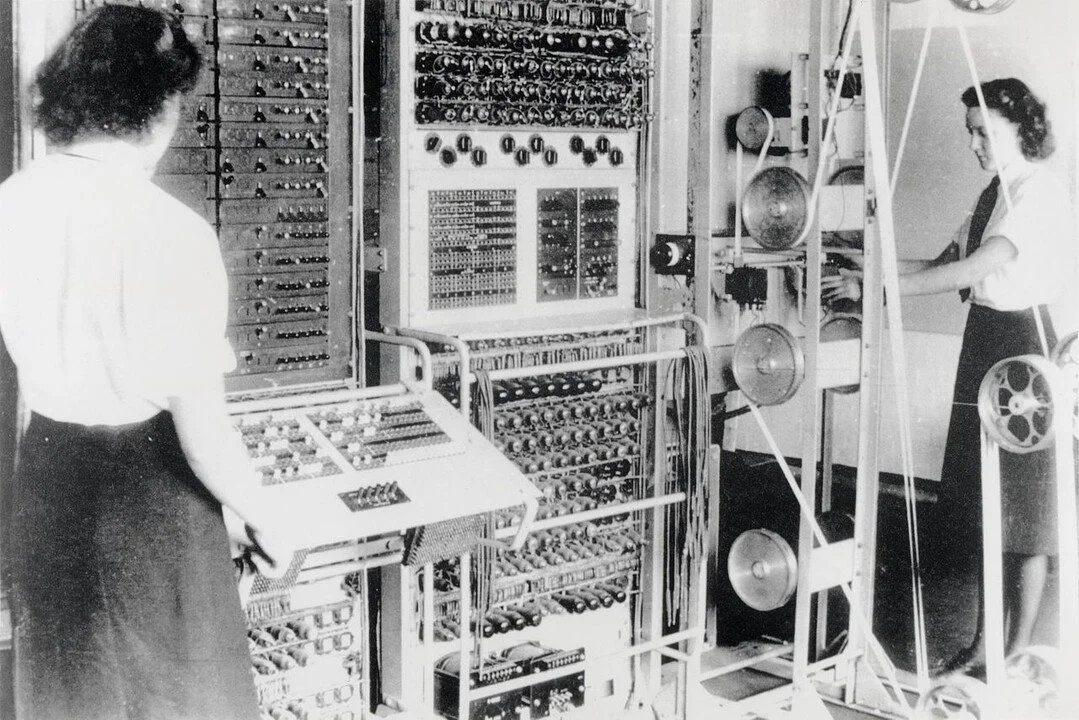
It is the secret that everybody knows: a story which has rightly become a legend. During the Second World War, Alan Turing and a team at Bletchley Park invented the computer in order to crack the Enigma code, shortening the war and saving millions of lives. Turing was persecuted for his sexuality and died tragically, to be recognised as a national hero decades later.
Except that, while Turing deserves all the acclaim we can give him, part of this story is wrong. Turing did not invent the computer to crack the Enigma code. The difference between the device used for Enigma, the Bombe, and the real first computer, Colossus, as well as the original thinking that Turing did before the war, help us understand what makes a computer a computer, and why they make such a difference to the world.
The round trip question: a tale of two computers
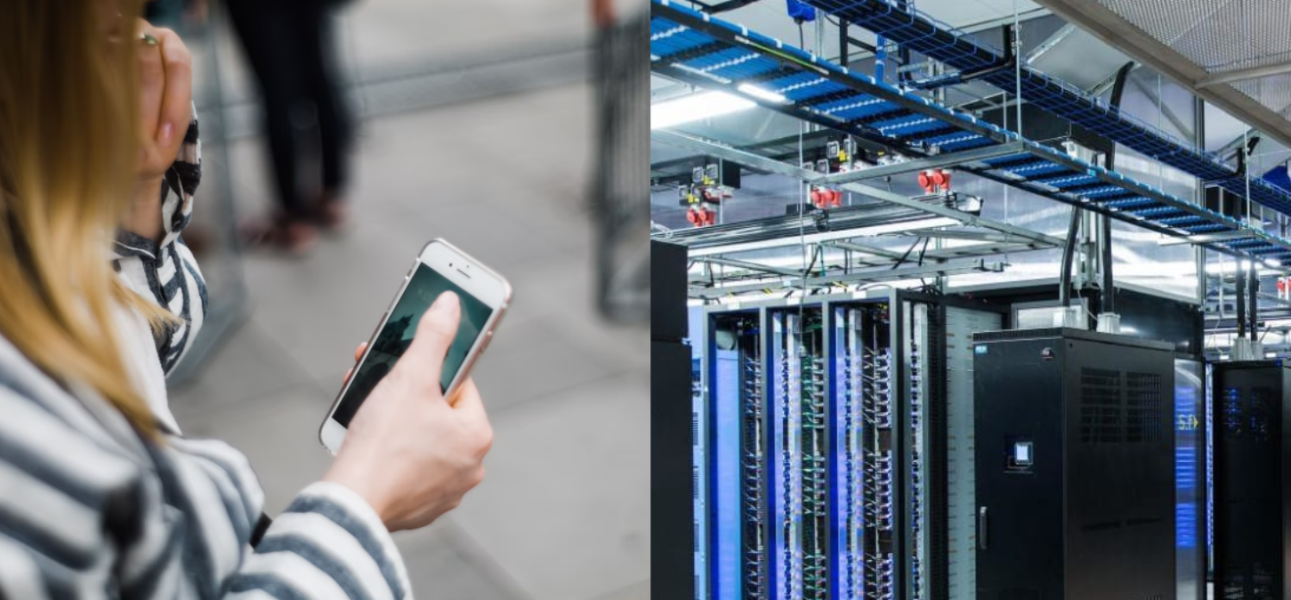
Let’s start with a problem. You think some bills have just been paid out of your account. You want to check how much money you have left. You have a computer in your hand - your mobile phone - but that computer does not currently know your balance. There is at least one computer that does know your balance, but it does not belong to you, and it sits in a large building hundreds of miles away. How does the number that represents your balance get from your bank’s computer to the mobile phone in your hand?
This is one of a series of articles which explores how we use computers to run the world by considering the round trip question: what happens when we press a button on a mobile banking app which tells it to do something with our money?
Simply by virtue of being computers, the phone in your hand and the machine in your bank have a lot of similarities. For now, though, I’d like to explore their differences, as those differences are what makes the round trip question interesting.
The round trip question: a duty to explain
Something has been bothering me: I have been designing, building and running computer systems for over thirty years, and believe that the explosive growth of information technology in that time is a net good for the world. At the same time, I have observed a growing gap in understanding between the people who build and run technology for a living and the people who use it. Information technology touches more people’s lives more deeply every day - yet is increasingly difficult to understand.
I sometimes test this feeling by asking what I call ‘the round trip question’. The question is: when you hit a button on your mobile banking app which tells it to do something (get your balance, make a payment, or some other function), what do you imagine happens? (It doesn’t have to be banking, but it’s the industry I happen to have worked in for longest.)