- agents
- AI
- APIs
- architecture
- augmented reality
- books
- bureaucracy
- career
- change
- Christmas
- cloud
- collaboration
- communication
- complexity
- computer history
- corporate life
- data
- decisions
- delivery
- devops
- end user tools
- ethics
- failure
- fear
- fundamentals
- gaming
- government
- history
- humans
- hype
- identity
- infrastructure
- innovation
- language
- leadership
- learning
- legacy
- management
- measurement
- mental health
- money
- networking
- New Year
- operations
- partnership
- philosophy
- physics
- platforms
- prediction
- process
- procurement
- programming
- quantum
- reliability
- resilience
- risk
- robotics
- science
- science fiction
- security
- shadow IT
- space
- standards
- strategy
- teaching
- teams
- technical debt
- technology advocacy
- testing
- thinking
- transformation
- TV
- virtues
- vision
- writing
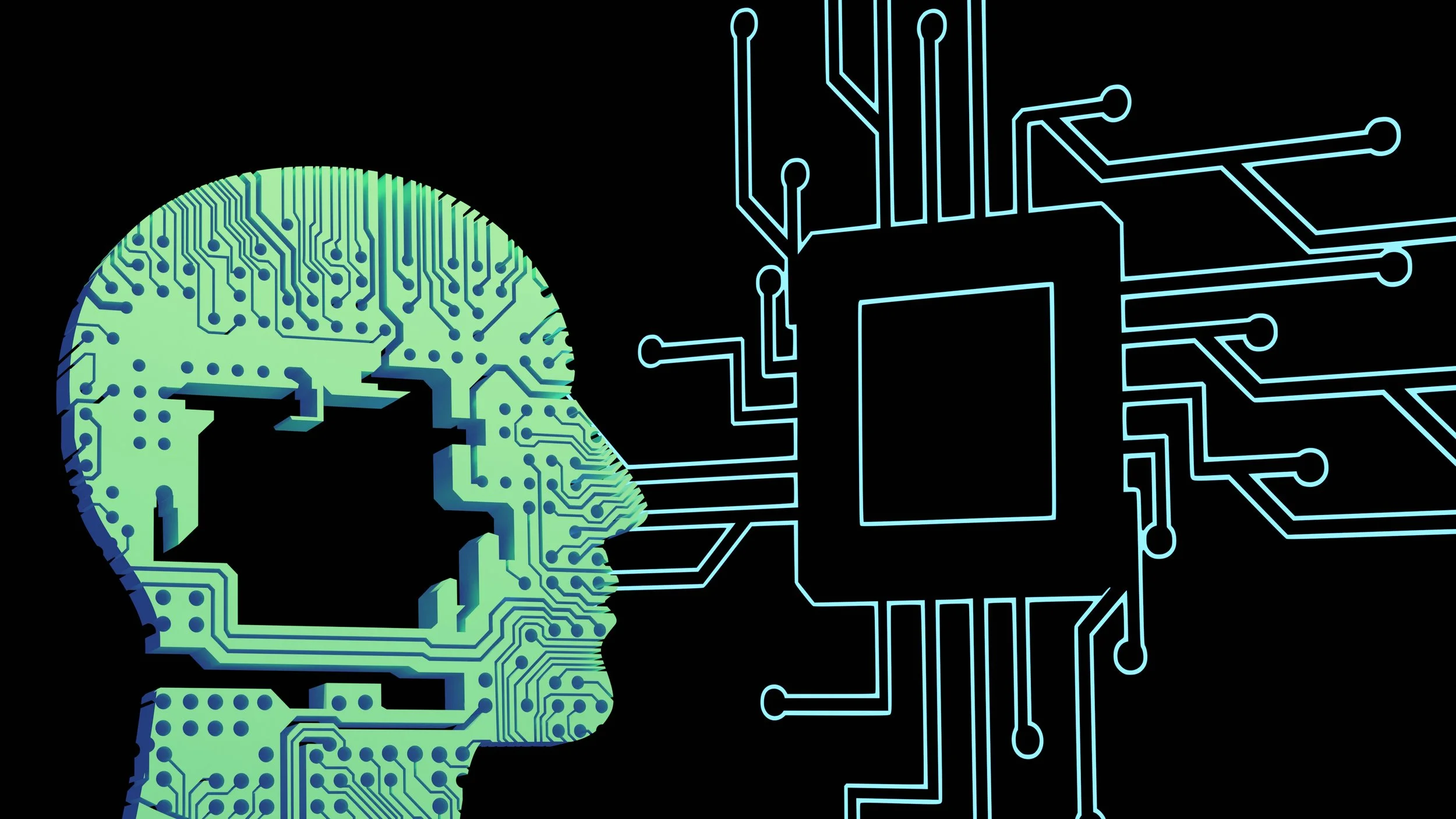
Embrace *all* the fundamentals, of software, of models - and of humans
I sometimes try to persuade business leaders that they should get to grips with the fundamentals of the technology they depend on. This often manifests as an exhortation to learn to code, not because I think they will be great coders (although they might be) or because we need more coders (although we do), but because engaging with the practical reality of building and running systems is the best antidote to the confusion, bewilderment and mystification that surrounds technology. And because they might make better choices about technology partnerships, investment, organisation, sourcing and strategy if they knew more about how it all worked.
For most of my career, this advice has been focused on traditional software: procedural code, written line by line by humans. However, as enterprises are attempting to figure out how to make effective use of AI, I think it is necessary for leaders to get to grips with the fundamentals of three types of work that goes on in their organisations: that carried out by software, that carried out by models, and that carried out by humans. I regularly see people confusing the characteristics of these three types of work, for example, claiming that an AI model is ‘like an intern’, or that there is no more need for a code base of software because AI will either make all the necessary decisions or generate all of the necessary code on demand.

Is there a human shaped hole in your technology plans?
If you’ve been watching The Last of Us then one of the things you will have noticed (alongside the great acting and story) is the eerie feeling of a human world with no humans: an empty world except for nature, a few survivors and, of course, the infected. I sometimes get that same eerie feeling when looking at plans for technology change: where are all the humans?
This is strange, because humans have been at the heart of new movements in the ways we build and run technology for decades.
The Agile Manifesto was published in 2001. Almost all of its 73 words (including the title) concern people, behaviour and communication rather than technology and tools. (Indeed, people and behaviour over technology and tools could almost be a line from the Agile Manifesto.)
The first DevOps days conference was held in 2009. You can still go and read the program (although if you try to follow the links to other sites in the reactions section, you get a great demonstration of link rot). While a lot of the agenda was clearly quite technical, much of it was focused on people, behaviours and communication. Do user stories really help express non-functional requirements? What does automation mean for sysadmins and development teams? How can practices followed by software developers be applied to operations?
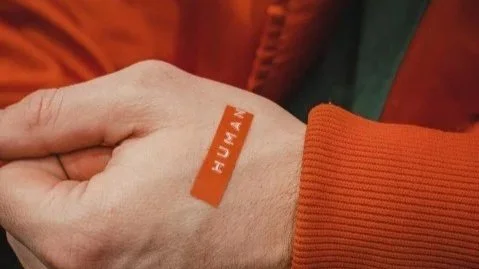
Always remember that computer systems have humans at both ends
We should never forget that computing is a human activity that should be used to improve human lives. All computer systems ultimately have humans at both ends: the humans that use the systems, and the humans that build and run those systems.
Unfortunately, the business of building, running and maintaining computer systems can often be so difficult that, in the process of organising programmes, building teams, hiring partners, and writing plans, we forget about the humans. Indeed, for many years, the methods most large companies companies followed to build computer systems seemed designed to squeeze the humanity out of those methods and systems.
If you work for a large enterprise, you have probably been involved in some way in a technology project, even if you have never worked as part of a technology team. You may have been on the receiving end of new software or changed systems, or may have had the opportunity to define requirements or test changes. You may also have heard the term ‘waterfall project’ and picked up the impression that we don’t like waterfall projects any more - even though we still seem to spend huge amounts of time, effort and money executing them.
A technology architect’s guide to humans part six: join more than the dots
What’s the most important email you will write today?
I bet that it’s not the one that starts, ‘Sorry to chase . . .’ or ‘As per my last email . . .’ or ‘Approved,’ or even the one that contains your fantastic new project or design idea. I think that the most important email that you write today might the one that says ‘<Person X>, I’d like you to meet <Person Y>: it looks like you might be working on the same thing / able to help each other / struggling with the same problem.’
Some years ago, I was fortunate enough to attend a leadership course on the value and power of connections within companies. The course tutor had conducted research in which they asked people within our company to list the people they spent time with each day, then mapped the results as a network. When we saw the shape of this network we were quite surprised: it was not shaped like a traditional corporate hierarchy, or even like a set of departments: it was shaped into lots of little clusters, each of which corresponded to a relatively small team.
A technology architect’s guide to humans part five: . . . sorry, what were you saying?
Sometimes being a technology architect is like being an 18th century French agriculturalist. No, don’t go: hear me out . . .
You may have eaten potatoes Parmentier: fried potatoes with herbs and garlic. You may not appreciate, though, the effort that Antoine-Augustin Parmentier, inventor of the dish, put into getting people like you to eat potatoes.
Parmentier was introduced to the potato as a prisoner of war in Prussia, and came to believe in them as a reliable food source at a time of frequent crop failures, famine and shortages. However, he faced extraordinary cultural and legal resistance from his countrymen. Potatoes were considered to be fit for animal feed only, were believed to cause leprosy in humans, and were even banned from cultivation from 1748.
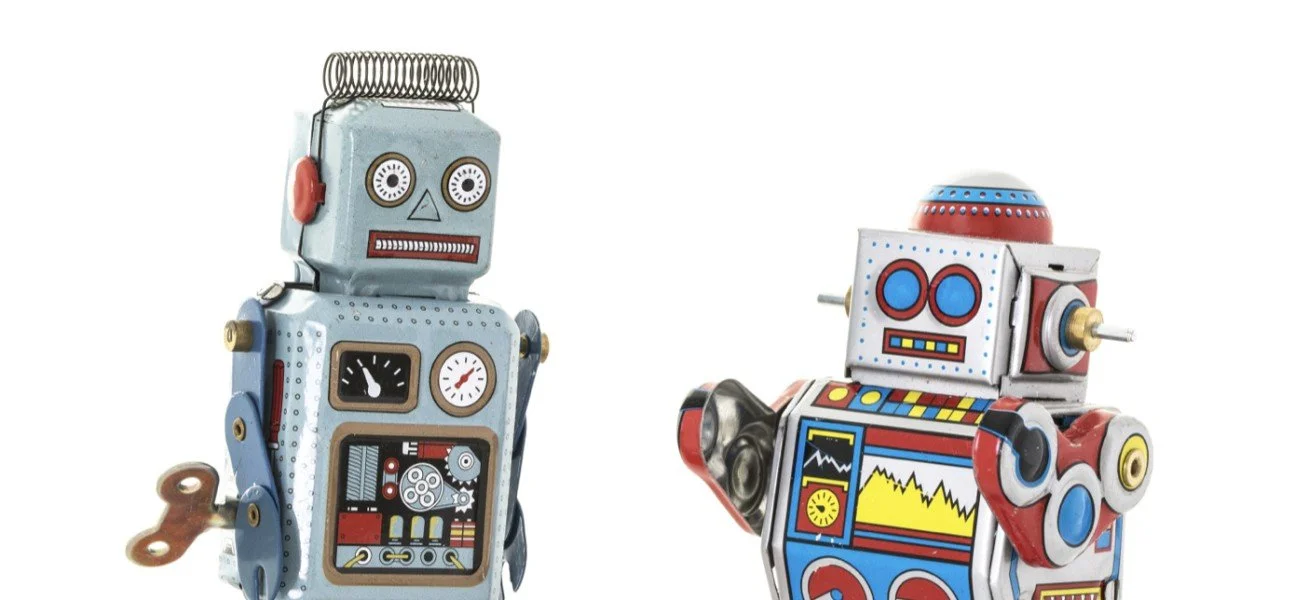
A technology architect’s guide to humans part four: they don’t know what you do all day (and you don’t know what they do)
Try this quick puzzle (without searching on the Internet or looking in the dictionary).
First, estimate how many words in the English language start with the letter ‘R’.
Second, estimate how many words in the English language have ‘R’ as their third letter.
The rough answer is that there are about 8,000 words that start with ‘R’ and about 25,000 that have ‘R’ in the third place. (English being the mutable thing that it is, estimates vary, but the proportions are about right).
Unless you have read the wonderful book by Daniels Kahneman, Thinking Fast and Slow, you probably got this the wrong way round. If you have read the book, you may recognise this as an example of the availability heuristic.
A technology architect’s guide to humans part three: difficult meetings will come to an end, respect will last much longer
Humans have a strange attitude to meetings. They claim to hate them, but spend a lot of time attending them.
Meetings are strange too. They are supposed to be tools for effective decision making. But, because they are made up of humans, they are also full of feelings: fear, doubt, pride, hostility, defensiveness and the rest.
At their best, great meetings can draw out these feelings, precipitate productive conflict (conflict is not always bad) and use them to help make good decisions. However, great meetings like that depend on a lot of conscious teamwork, some external coaching, and a team which is highly mature and comfortable with itself. Most teams and most meetings are not like that. As a result, they often attempt to take decisions in an environment which is not calibrated for good decision making.
A technology architect’s guide to humans part two: it’s not them, it’s you
Nobody believed Cassandra, but she had a good excuse.
Cassandra was a figure in Greek mythology. When she spurned the advances of the god Apollo, he gave her the gift of prophecy, but also inflicted the curse that no-one would believe her predictions. Depending on which versions of the myth you read, if people had paid attention to Cassandra, then Odysseus could have avoided the long wanderings of the Odyssey, the Trojans would not have taken the horse into their city, and Paris would not have abducted Helen in the first place, avoiding the whole Trojan war.
All technology architects feel like Cassandra at least some of the time.
A technology architect’s guide humans part one: humans are human
It doesn’t take long working as a technology architect to realise that technology is easy, but humans are hard. Today’s technology is complex, can be difficult to understand, and changes at an ever increasing rate. But technology behaves in predictable ways, even when it fails. As you long as you understand it at a sufficiently fundamental level, technology does what you tell it to.
By contract, humans are less predictable, and less inclined to do what you ask them to do. They ask questions, they raise objections, they suffer fear, uncertainty and doubt. They need to be emotionally committed as well as rationally persuaded before they apply all their energy. They misunderstand and they forget. But when they are persuaded and committed, they bring imagination, passion and creativity that no machine can match.
If you are a technology architect, you probably work with humans every day. Your family and friends are likely to be humans and, unless there have been unexpected advances in AI since I wrote this blog post, you are probably a human too. Yet, if you’re anything like me, I expect that you feel that you still haven’t figured these humans out yet.