- agents
- AI
- APIs
- architecture
- augmented reality
- books
- bureaucracy
- career
- change
- Christmas
- cloud
- collaboration
- communication
- complexity
- computer history
- corporate life
- data
- decisions
- delivery
- devops
- end user tools
- ethics
- failure
- fear
- fundamentals
- gaming
- government
- history
- humans
- hype
- identity
- infrastructure
- innovation
- language
- leadership
- learning
- legacy
- management
- measurement
- mental health
- money
- networking
- New Year
- operations
- partnership
- philosophy
- physics
- platforms
- prediction
- process
- procurement
- programming
- quantum
- reliability
- resilience
- risk
- robotics
- science
- science fiction
- security
- shadow IT
- space
- standards
- strategy
- teaching
- teams
- technical debt
- technology advocacy
- testing
- thinking
- transformation
- TV
- virtues
- vision
- writing

Can we see the future from here?
After the Second World War, it was clear that the telecommunications infrastructure of many countries needed an upgrade. The digital computer had been invented, and was emerging from the lab into the economy. In the USA, the giant early warning and control system, SAGE (Semi-Automated Ground Environment) was being built to cope with the threat of nuclear war, and needed systems and sensors to be connected across the country. The old copper cables of the telephone and telegraph systems were not up to the job.
Fortunately, experts, researchers and engineers had a solution: they would use light to transmit information rather than pushing electrons through copper. However, they did not start with the flexible, glass optical fibres that we are familiar with today: they believed that glass could not be manufactured with sufficient transparency to carry light over long distances and that, even if it could, the photons would escape at the bends.

Don’t settle for horses when you could have dragons
Sometimes, when we are talking about technology, we quote Henry Ford, who said, ‘If I had asked people what they wanted, they would have asked for a faster horse.’
Except that Henry Ford never said these words. They were first associated with him in 1999, when an article by John McNeece suggested that, ‘There is a problem trying to figure out what people want by canvassing them. I mean, if Henry Ford canvassed people on whether or not he should build a motor car, they’d probably tell him what they really wanted was a faster horse.’
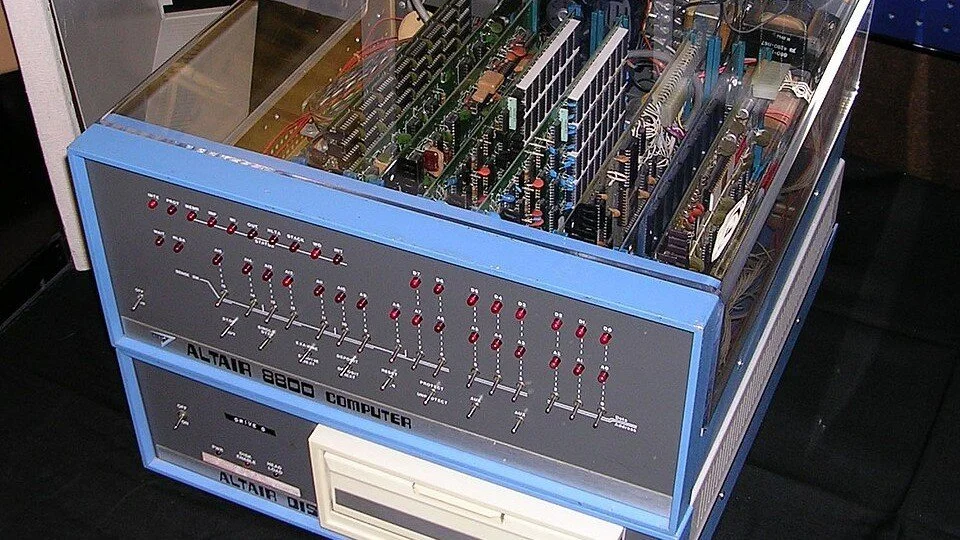
How hard can it be? The power of optimism and naivety.
‘ . . . and now I couldn’t do it because I could see right off there’s no way you could do this. But at that time, we lacked the benefits of age and experience.’ (Ed Roberts, creator of the Altair 8800, the first home computer.)
‘I was so nervous, I felt this is just not going to work - and it worked!’ (Steve Allen, co-founder of Microsoft, on running BASIC on the Altair 8800 for the first time.)
‘We didn’t know what we were doing.’ (Steve Jobs, co-founder of Apple, on creating the Apple I.)
‘How hard can it be?’ What do you think when you hear those words?
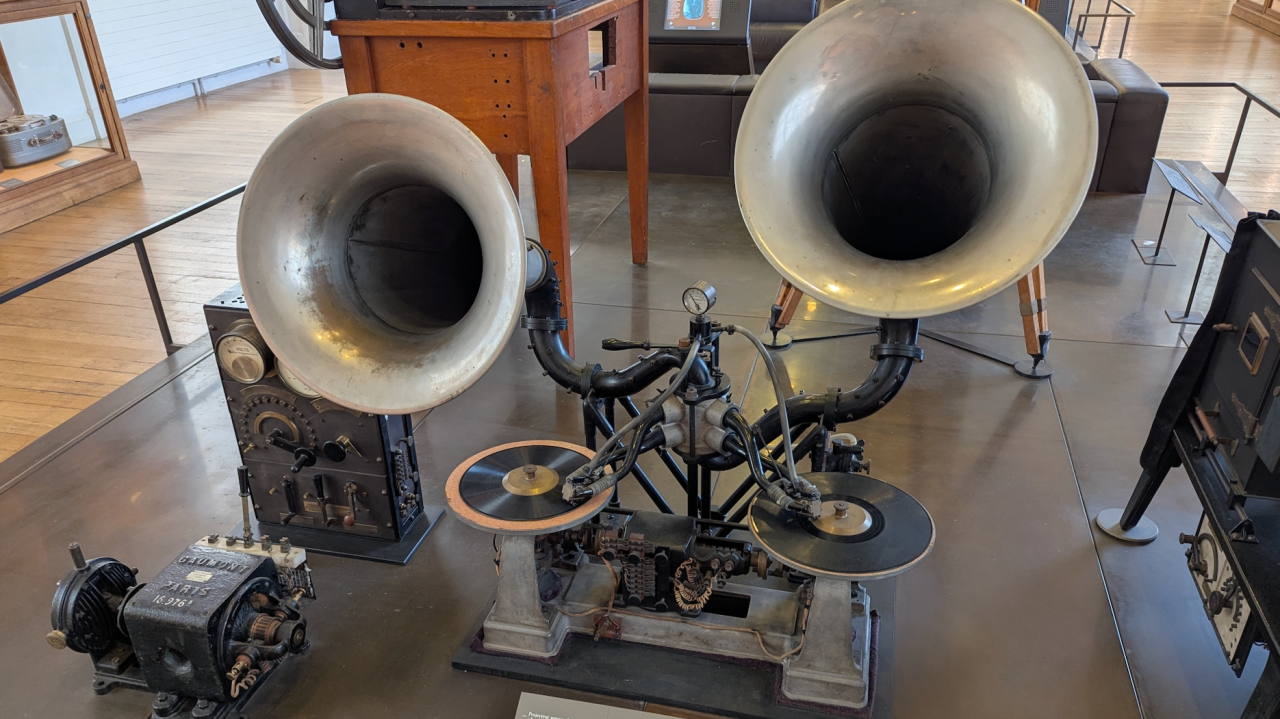
Revealing invisible ingenuity
If you are ever in Paris and looking for something to do, then it is worth a visit to the Musée des Arts et Metiers. Don’t be misled by the name: although it translates to ‘Museum of Arts and Crafts’, you won’t find any William Morris wallpaper or Rennie Mackintosh chairs: it is a museum of technology.
What you will find is hall after hall of inventions, models and instruments, from the 18th century to the 21st century, charting the development of technologies that have shaped the world. There are early phonographs and radios, steam engines and looms, suspension bridges and space robots. There is a secret camera built into a hat, the preserved laboratory of Antoine Lavoisier, and Foucault’s pendulum, swinging backwards and forwards from the roof of a church, steadily measuring the rotation of the Earth.
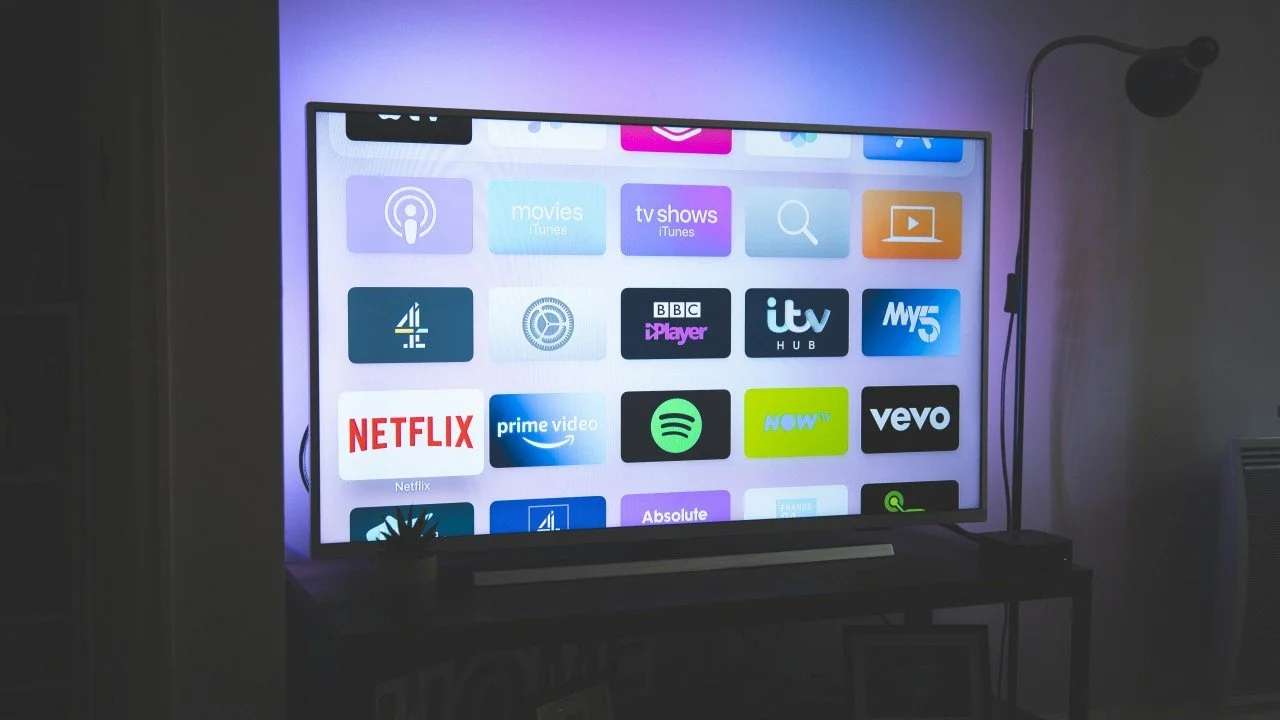
AI - a catch up guide to early episodes
Have you ever tried to start a major TV series partway through? You hear everybody talking about it at work, and it sounds thrilling. Then you watch the latest episode, and are baffled by names, places and relationships. Why is this woman so angry with that man? Why are those two factions fighting? And why are those people wandering in the wilderness, apparently disconnected from the rest of the plot? You switch to the series guide on your streaming service and realise that, to catch up, you are going to have to watch the three previous seasons. Perhaps you should just watch that cooking show again.
Trying to understand AI can feel like this. To many people, the appearance of generative AI a few years ago was a sudden, magic and unheralded event, followed by a never ending stream of releases, products and announcements. It’s hard to make sense of the present, let alone look to the future.

Your Moonshot doesn’t have to be a Moonshot
In 1962, NASA faced a difficult technology procurement choice.
They needed a guidance computer for the Apollo Moon missions. Did they go for a design based on new technology, working with researchers at MIT, or a design based on proven technology from their existing suppliers?
They chose the new technology: rather than discrete electronic transistors, they would use silicon chips, which combined multiple transistors into a single component. These chips weren’t like the chips of today, though: rather than millions or billions of transistors, they contained just a few transistors, each representing a single logic gate. Thousands of them were needed to build the Apollo Guidance Computer (AGC).

Technologists are always crying wolf (because of all the wolves)
The computer had failed. Unfortunately, it was the Apollo Guidance Computer (AGC), the machine that controlled the flight of a small, fragile spacecraft to the Moon and back. Fortunately, it wasn’t in space: it was on the ground, in a simulator.
Margaret Hamilton, the leader of the MIT team programming the AGC, often had to work weekends to meet the urgent schedule of the Apollo programme, and sometimes brought her daughter, Lauren, to work with her. Lauren liked to play in the simulator.

Sometimes it’s fine to have a solution looking for a problem
The lightbulb was not always the symbol of a good idea.
Edison’s incandescent electric lightbulb initially met with scepticism on both sides of the Atlantic. Henry Morton of the Stevens Institute of Technology said that, ‘Everyone acquainted with the subject will recognise it as a conspicuous failure,’ while a British Parliamentary committee said that it was, ‘unworthy of the attention of practical or scientific men.’
Part of the reason for this scepticism was due to problems that had not yet been solved, such as the distribution or ‘subdivision’ of electricity. But part of it was also due to the feeling that these problems did not need to be solved: there were already established ways of providing illumination. Edison’s lightbulb was a solution looking for a problem.

Breaking the cloud barrier
On October 14th, 1947, Chuck Yeager became the first human to break the sound barrier, flying the Bell X-1 experimental plane. Prior to that event, there had been serious doubt about whether it was possible to break the sound barrier at all: aircraft approaching the barrier had experienced buffeting, instability and even crashes. However, Yeager’s flight was remarkably smooth: his plane had been designed for supersonic flight. Yeager later said, ‘I realized that the mission had to end in a let-down because the real barrier wasn’t in the sky but in our knowledge and experience of supersonic flight.’ Your and my definition of a let-down may vary from Yeager’s definition.
I believe that the experience of human efforts to break the sound barrier is analogous to enterprise efforts to adopt new technology. Right now, this is particularly apparent in the adoption of public cloud. Despite being convinced of the advantages of software defined, elastic, on-demand platforms, every organisation seems to have its own version of the sound barrier when it comes to cloud. Let’s call it the cloud barrier.

When talking to AI, be careful what you ask for
You’ve got to ask the right questions.
According to Herodotus, when Croesus went to the Oracle at Delphi to ask whether he should go to war, the Oracle replied that, ‘If you make war on the Persians, you shall destroy a great empire’. Encouraged, Croesus launched his war, only to find that he was defeated, and it was his empire that was destroyed.
This lesson seemed particularly important when I was attempting my second week of learning in public about generative AI. As with my exploration of quantum computing, I began this second week by opening my browser, entering some search terms and reading the top few news articles that were returned.
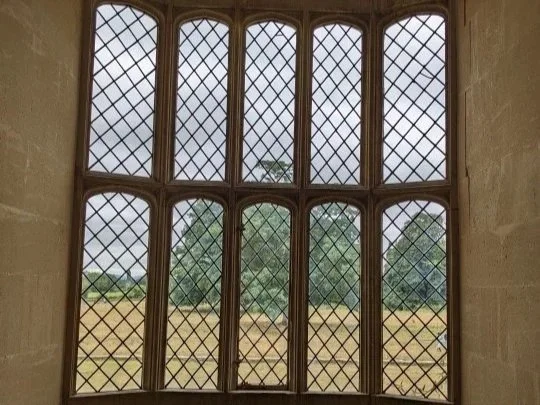
Through the innovation window
Last week I had the chance to look through a historical pane of glass.
I was visiting Lacock Abbey, the place where Henry Fox Talbot took the first ever photographic negative image in 1835, of a window with latticed leading.
It was a strange feeling, looking through the window which had produced such a significant image. I spent a few moments in reflection, imagining what Fox Talbot must have felt when he first realized that his experiment had worked. Then I took a picture on my phone.
I believe that this historical moment reinforces three important lessons for technologists and innovators today.

Completing the round trip: from centuries to microseconds
What happens when you press ‘send’ on your mobile banking app? I first posed what I called ‘the round trip question’ a few weeks ago, to illustrate that the people who build technology have a duty to explain. Over those weeks, I’ve explored the nature of computing, of digital communication, of identity, and of the humans who build and use systems. I’ll now attempt to give an end-to-end answer to the question, starting a little bit before you press that button . . .
Mid-19th century: Ada Lovelace and Charles Babbage collaborate on the Analytical Engine, intended to be the first programmable, general purpose computer, although it was never finished. Samuel Morse (and others) create a binary code for communication over telegraph wires.
1930s and 1940s: Alan Turing publishes the paper, ‘On Computable Numbers, With an Application to the Entscheidungsproblem,’ laying the theoretical foundations for digital computers. The theory is put into practice by the creation of Colossuss by Tommy Flowers in Bletchley Park.