- agents
- AI
- APIs
- architecture
- augmented reality
- books
- bureaucracy
- career
- change
- Christmas
- cloud
- collaboration
- communication
- complexity
- computer history
- corporate life
- data
- decisions
- delivery
- devops
- end user tools
- ethics
- failure
- fear
- fundamentals
- gaming
- government
- history
- humans
- hype
- identity
- infrastructure
- innovation
- language
- leadership
- learning
- legacy
- management
- measurement
- mental health
- money
- networking
- New Year
- operations
- partnership
- philosophy
- physics
- platforms
- prediction
- process
- procurement
- programming
- quantum
- reliability
- resilience
- risk
- robotics
- science
- science fiction
- security
- shadow IT
- space
- standards
- strategy
- teaching
- teams
- technical debt
- technology advocacy
- testing
- thinking
- transformation
- TV
- virtues
- vision
- writing
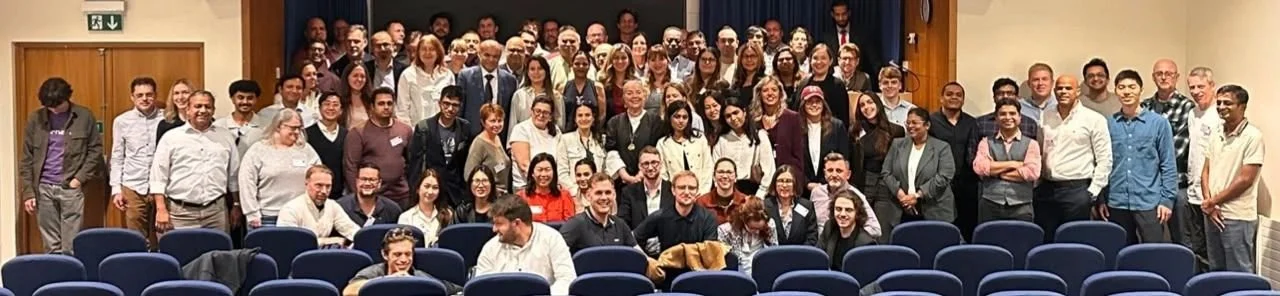
Curious humans help each other think better
I was privileged to attend and speak at the AI Summit in Oxford last week (with huge thanks to Ajit Jaokar and the rest of the team for making it happen). As ever, I learnt a lot from the formal presentations, and even more from the conversations during breaks. However, the moments that really shaped my thinking were those which challenged my preconceptions. Here are three of those challenges:
Why don’t you like the Stoics?
In my own keynote session, I talked about one of my favourite topics: AI ethics, and how we can use ideas about virtue, vice and flourishing to develop a rounded, flexible and human response to the challenges of new technology. (I also wrote about this last week.) In that talk, I dismissed other forms of philosophy that seem to be popular in Silicon Valley, particularly utilitarianism (too concerned with optimisation), deontology (too focused on finding rules which probably don’t exist) and Stoicism. I also rashly promised, that I would explain my antipathy to these schools of thought during the break.

AI leadership needs practical wisdom
AI ethics must be more than a set of policies, checked off through a compliance process or reviewed in a governance meeting. Ethics must include reflection, opinions and never-ending arguments about how we should live, and AI ethics must include patterns of thought and behaviour which we deliberately, and deliberatively, seek and acquire.
Making sense of AI is difficult, especially if we take the task seriously: that is, not just attempting to understand the engineering and mathematics of AI, or even its application and economics, but also its impact on our minds, knowledge, roles, relationships and all the other things that make up our lives. I believe that a philosophical tradition over two thousand years old can help, as long as we approach it thoughtfully.

Don’t talk to me about legacy: I’ve got wax in my ears
I learnt a new concept this week, from Cory Doctorow's blog: the idea of the Ulysses Pact. It comes from the part of the Odyssey where the Greek hero orders his men to tie him to the mast of his ship as they approach the lair of the Sirens, monsters whose songs lure sailors onto the rocks. Ulysses’ crew will follow the standard remedy of blocking their ears with wax, while Ulysses will become the first person to hear the deadly song and survive. As well as ordering the crew to tie him up, Ulysses tells them that, no matter what he says, no matter how much he threatens or implores them, they must not set him free.
The idea of the Ulysses Pact is for those times when we know that we will be tempted in the future to act against the values, instincts and interests that we have now. Unless we are unusually self-disciplined, we have this experience every time we embark on a diet, or exercise regime, or a course of learning: we want the good intentions of today to override the temptations of tomorrow. We adopt tactics such as purging our house of snacks, or putting gym and study sessions into our diaries. We lash ourselves to the mast of self-improvement and hope that the bonds are strong enough.

Software development and the problem of akrasia
another episode of the TV programme when we know we should be studying?
In philosophy, these are problems of akrasia, or weakness of the will. Put simply, the puzzle is: if we know that we should do something (or not do something), and we want to do that thing (or not do it), how is it possible that we put it off (or choose to do it)? Why do we do the things that are bad for us, even when we know that we are bad for us?
This might seem to be one of those questions that only a philosopher could worry about. Isn’t it obvious? We eat the extra slice of cake because we like cake, and, in the moment, our pleasure matters more than our long term health. We skip the session at the gym because it seems too much like hard work, especially compared to extra time in bed or another cup of coffee. And we watch more TV instead of studying because we’re caught up in the programme - and there’s always tomorrow.

In the wonderland of new technology, let’s be curiouser and curiouser
What can Aristotle, a philosopher from the 4th century BCE, teach us about technology that was released in 2022?
Well, he wrote about techne, practical skill, the term that gives technology its name. However, I think that we can learn more today from what he wrote about arete, or virtue.
Aristotle’s conception of virtue experienced a renaissance in the 20th and 21st centuries, and many better people than me have written many words on the topic. For our purposes, though, we can understand virtue simply as a habit of thought and behaviour of which we approve, which forms part of a flourishing life, and which is self-reinforcing: the practice of virtue makes us virtuous. Virtues include attributes such as courage, honesty and generosity, and are opposed by vices such as cowardice, dishonesty and miserliness. Aristotle also suggested that vices are extremes, and that virtues are the mean that navigates between them. For example, generosity is the mean between being a miser and being a spendthrift.

Servant leadership for cloud transformation (or any other transformation)
What character traits do you need to lead Cloud transformation? Which should you avoid?
I recently wrote a series of blog posts about seven key roles for Cloud transformation - or for any other large scale, technology enabled transformation. That prompted me to ask myself a question: how should leaders behave when they fill these roles? I believe that leadership requires more than the competent execution of a set of tasks and responsibilities: it requires the adoption and practice of a set of behaviours which will make your transformation successful - and make the experience rewarding and fulfilling for the people in the team.
When asking questions about behaviour, my philosophical background leads me to Aristotle’s theory of the virtues. In Aristotle’s philosophy (and much philosophy which has come after), virtues are behaviours which we value, whose practice is self-reinforcing (the more often we are honest, the more honesty becomes a habit), whereas vices are self-reinforcing behaviours which we don’t value (if we lie frequently it is hard to stop).

Philosophy for architects: which habits will you make and which habits will you break?
Many of us will be working in unusual circumstances for extended periods of time. We will be at home rather than in the office. We will see more of our family than our colleagues. When we do see our colleagues, it will be by video rather than in person. (And, of course, if we are fortunate enough to be healthy, housed and in work, we will learn to be grateful for those things that we normally take for granted.)
As we adjust to this new way of life, we will form habits. We will (or will not) find ways to exercise. We will (or will not) find time to talk to people we wouldn’t otherwise see. We will (or will not) let our frustration and impatience with technology leak through into our behaviour. We will (or will not) continuously raid the cupboard for snacks.
Ethics, the philosophy of morals, contains some ideas about habits which might be useful to us as we live through these strange times. To understand these ideas, though, we must begin with some basics.

AI ethics: one FAQ, two concerns and a hope
In the last two weeks, I was honoured to be invited to sit on two panels on the topic of AI ethics and responsiblity, one as part of a training course within HSBC, and one as part of the Google Next 2019 conference.
I was asked a similar question in both panels, which went something like this: how does the combination of my academic background in ethics and my professional background in enterprise technology shape my perspective on AI ethics?
I’ve been asked this question often enough for it to count as an FAQ, so I thought it might be helpful to share my answer here.
Before I share it, though, I have to give one big caveat. Studying philosophy and attempting to keep up with the latest developments in technology teach me both humility and the depths of my ignorance, so I am aware that any thoughts I share here are provisional, personal and have a strong likelihood of being wrong.