- AI
- ambiguity
- APIs
- architecture
- augmented reality
- books
- bureaucracy
- career
- change
- Christmas
- cloud
- collaboration
- communication
- complexity
- computer history
- corporate life
- data
- decisions
- delivery
- devops
- end user tools
- ethics
- failure
- fear
- fundamentals
- gaming
- government
- halloween
- history
- humans
- hype
- identity
- infrastructure
- innovation
- language
- leadership
- learning
- legacy
- management
- measurement
- mental health
- money
- networking
- New Year
- operations
- partnership
- philosophy
- physics
- platforms
- prediction
- process
- procurement
- programming
- quantum
- reliability
- resilience
- risk
- science
- science fiction
- security
- shadow IT
- space
- standards
- strategy
- teaching
- teams
- technical debt
- technology advocacy
- testing
- thinking
- transformation
- TV
- virtues
- vision
- writing

A technology architect’s guide to humans part three: difficult meetings will come to an end, respect will last much longer
Humans have a strange attitude to meetings. They claim to hate them, but spend a lot of time attending them.
Meetings are strange too. They are supposed to be tools for effective decision making. But, because they are made up of humans, they are also full of feelings: fear, doubt, pride, hostility, defensiveness and the rest.
At their best, great meetings can draw out these feelings, precipitate productive conflict (conflict is not always bad) and use them to help make good decisions. However, great meetings like that depend on a lot of conscious teamwork, some external coaching, and a team which is highly mature and comfortable with itself. Most teams and most meetings are not like that. As a result, they often attempt to take decisions in an environment which is not calibrated for good decision making.
The biggest step is from zero to one
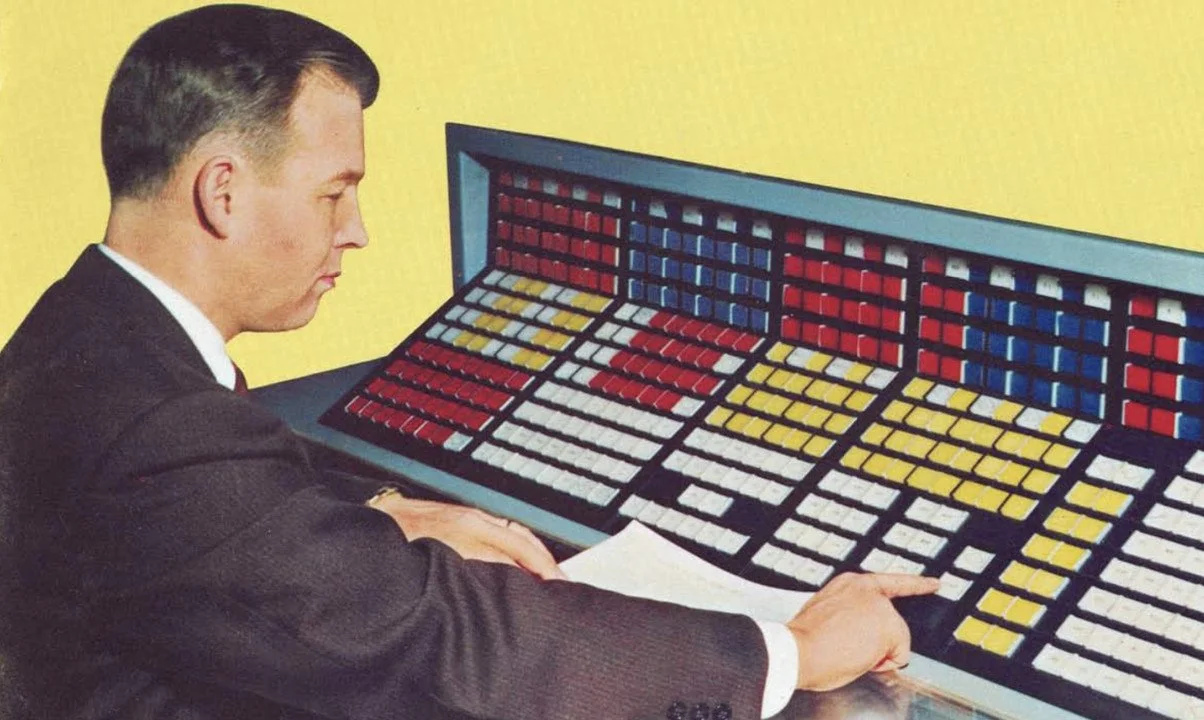
This week I visited our Griffin House office in Sheffield for the last time, before we complete the move to our fantastic new Grosvenor House office a short distance away. The place was part way through packing. Amongst the crates and unplugged machinery, I discovered a print of an article which I guess is from the early 1980s, entitled ‘Into the computer age’and subtitled, ‘Hard on the heels of the Bank’s mechanisation programme came the first commercially viable computers, big enough to fill a room and as mysterious as the switches and dials of Flash Gordon’s space rocket.’
The article lovingly described the purchase of HSBC’s first ever computer in 1961, the English Electric KDP10 (which it turns out, sadly, was not actually a British computer, but a rebadged RCA501 from the USA - computer historians feel free to correct me in the comments), the selection and training of the ‘Magnificent Seven’, the first members of the nascent IT department, and the system of collecting paper tape from machines in branches and shipping them to the computer to be processed.
Design Agile bridges to the future
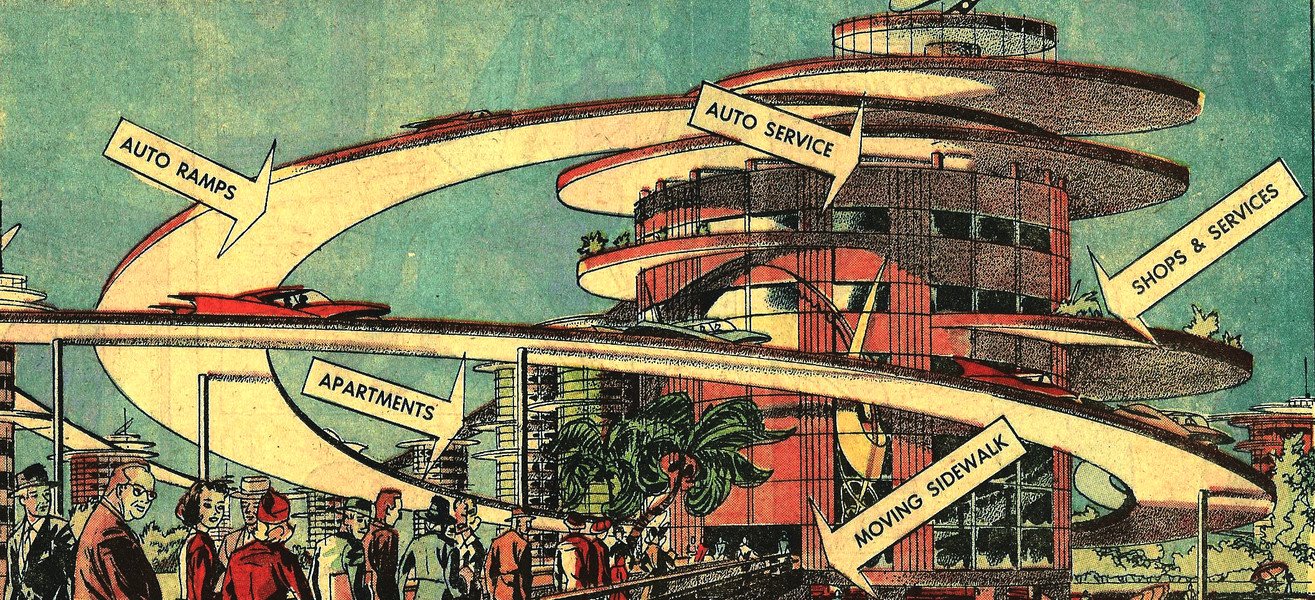
In 1960, Geoffrey Anthony Jellicoe unveiled his plans for Motopia: a city of the future in which cars drove on the tops of buildings, and pedestrians were transported by moving walkways at street level. Freed from the need to dedicate land to roads, Motopia would be a city of parks and trees. Unsurprisingly, Motopia was never built, and it’s possible that it was never intended to be built.
Technology architects in large enterprises sometimes look like Jellicoe presenting his grand ideas, and often feel like Jellicoe when those grand ideas are never realised. We paint pictures of the future based on exciting new technology, while others wonder whether that future is possible, and whether it is somewhere they would actually want to live (or whether cars would fall on their heads).
In an earlier blog post I said that if people don’t understand architects, then it is our fault, not theirs. This is just as true of strategic visions as it is of day to day design decisions: no-one is obliged to understand us or back us if we can’t explain ourselves, and if we can’t make it clear how we get from here to there.

Sometimes it’s good to feel stupid
There’s a video circulating on the Internet which claims to show a fast way to peel garlic. The poster of the video simply sticks a knife into each garlic clove while its still attached to the bulb, and levers it straight out of its papery casing. Each clove takes less than a second to peel.
It’s not clear whether the technique is real, or whether there is some trickery involved, but it’s hard to watch it without thinking: ‘If this is right, I’ve been stupid. I’ve been peeling garlic the wrong way all my life.’
If you’re a technology architect in a large enterprise, this is probably a familiar feeling. We try to cover a broad field which changes every day, and it’s impossible to know everything, even if people often expect us to. Often, our value lies not in knowing everything, but in knowing when to turn to others for help. And the best type of help is that which doesn’t just address an immediate problem, but changes the way we think about the problem entirely. It’s the type of help which makes us think, ‘I’ve been stupid.’

A technology architect’s guide to humans part two: it’s not them, it’s you
Nobody believed Cassandra, but she had a good excuse.
Cassandra was a figure in Greek mythology. When she spurned the advances of the god Apollo, he gave her the gift of prophecy, but also inflicted the curse that no-one would believe her predictions. Depending on which versions of the myth you read, if people had paid attention to Cassandra, then Odysseus could have avoided the long wanderings of the Odyssey, the Trojans would not have taken the horse into their city, and Paris would not have abducted Helen in the first place, avoiding the whole Trojan war.
All technology architects feel like Cassandra at least some of the time.

Cowboys vs dinosaurs: peace through perspective
When I was growing up, cowboys fought dinosaurs.
This was in the distant past, before streaming, before cable and even before VHS, in the days when entertainment meant Sunday afternoon films round my grandparents’ house, on the big telly which took forever to warm up and which made everyone look orange.
In those days, even though there were only three channels to fill, the schedule was full of repeats, and we seemed to see the same films over and over again. In particular, I am sure that I saw the film Valley of Gwangi several times.
This film is a bit of an oddity. My grandfather and I watched plenty of Westerns together, but this is the only one where members of a traveling show enter a hidden valley to capture dinosaurs and put them on display. It doesn’t end well.

A technology architect’s guide humans part one: humans are human
It doesn’t take long working as a technology architect to realise that technology is easy, but humans are hard. Today’s technology is complex, can be difficult to understand, and changes at an ever increasing rate. But technology behaves in predictable ways, even when it fails. As you long as you understand it at a sufficiently fundamental level, technology does what you tell it to.
By contract, humans are less predictable, and less inclined to do what you ask them to do. They ask questions, they raise objections, they suffer fear, uncertainty and doubt. They need to be emotionally committed as well as rationally persuaded before they apply all their energy. They misunderstand and they forget. But when they are persuaded and committed, they bring imagination, passion and creativity that no machine can match.
If you are a technology architect, you probably work with humans every day. Your family and friends are likely to be humans and, unless there have been unexpected advances in AI since I wrote this blog post, you are probably a human too. Yet, if you’re anything like me, I expect that you feel that you still haven’t figured these humans out yet.
This not a negotiation: beyond win-win?
When is a negotiation not a negotiation? And can we do even better than win-win?
In the HSBC Architecture team, we aspire to the three dimensions of architecture excellence we call Zang Jing Ge: technical excellence, communication mastery and leadership power. In a recent article, our Head of API Integration and Microservices, Marco Tedone, argued that we need a fourth dimension: negotiating skills, or Minghzhi De, meaning ‘wisdom’.
I agree that all architects need good negotiating skills, and believe that we can fit them in the centre of the Zang Jing Ge model: good negotiation needs technical excellence (knowing what you want), communication mastery (getting the other party to understand your position and goals) and leadership excellence (leading everyone, if possible, to a win-win outcome).

AI ethics: one FAQ, two concerns and a hope
In the last two weeks, I was honoured to be invited to sit on two panels on the topic of AI ethics and responsiblity, one as part of a training course within HSBC, and one as part of the Google Next 2019 conference.
I was asked a similar question in both panels, which went something like this: how does the combination of my academic background in ethics and my professional background in enterprise technology shape my perspective on AI ethics?
I’ve been asked this question often enough for it to count as an FAQ, so I thought it might be helpful to share my answer here.
Before I share it, though, I have to give one big caveat. Studying philosophy and attempting to keep up with the latest developments in technology teach me both humility and the depths of my ignorance, so I am aware that any thoughts I share here are provisional, personal and have a strong likelihood of being wrong.

You don’t need any magic in this magic
Jonathan Creek, the protagonist of the BBC TV series of the same name, is a magician’s assistant who solves unlikely crimes using the same understanding of mechanics, engineering and psychology that he brings to the design of magic tricks for the stage.
In the very first episode Jonathan (played by Alan Davies) is reluctantly persuaded by a journalist, Maddie (played by Caroline Quentin), to perform a magic trick, and then to explain how it works. After Jonathan has duly amazed Maddie by apparently reading her mind and conjuring a name onto a piece of paper, he then disappoints her by showing her that the trick was nothing but some sleight of hand, misdirection and assistance from an accomplice. Maddy declares the trick to be ‘mind-numbingly banal’.
That’s Jonathan’s point: everyone is amazed by magic and claims to want to know how the trick is done, but they don’t really want to know the mundane reality behind the scenes.

What is the C that you are trying to P?
Three little letters strike terror into the hearts of architects everywhere: P. O. C.
This seems strange. Surely in the age of digital transformation, innovation, and a willingness to fail fast, conducting proofs of concept is exactly what we should be doing. Why should architects be scared of POCs?
The reason is that, unfortunately, in large enterprises, many POCs are not POCs at all. Whether deliberately or accidentally, they stand little chance of proving a concept: in fact, it’s not even clear which C they are trying to P.
Let’s look at two types of POCs which standing little chance of P’ing a C: POCs in name only (let’s call them POCINOs) and POCs without concepts(let’s call them POCWOCs).
ShenXian: two models of leadership
Every time I go to China I learn at least one new thing. On my last visit to Guangzhou, our Head of AI Engineering, Ray Zeng, introduced me to a whole new way of thinking about IT leadership through the concept of ShenXian.
(At this point I have to confess that, unlike Ray, who lives in Hong Kong, but grew up in Shanghai, I am no expert in Chinese culture, so I am sure that I will get some of these ideas wrong: I will let my colleagues from China correct me in the comments.)
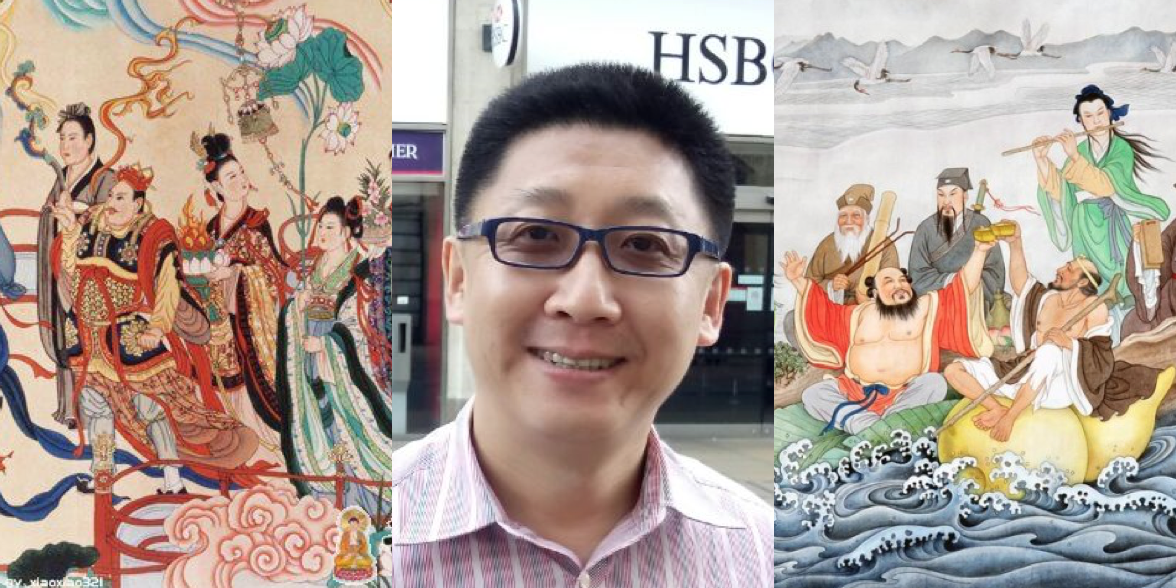
My understanding is that the term ShenXian is used to describe two distinct types of heroes, immortals or saints. Shen are beings who have been part of the world since the start of time, or who have been promoted to their divine status through their great feats while they were on earth, often on the battlefield. They might be warriors or generals, and are portrayed flamboyantly, wearing armour or shining clothes. They are often associated with large armies.