ShenXian: two models of leadership
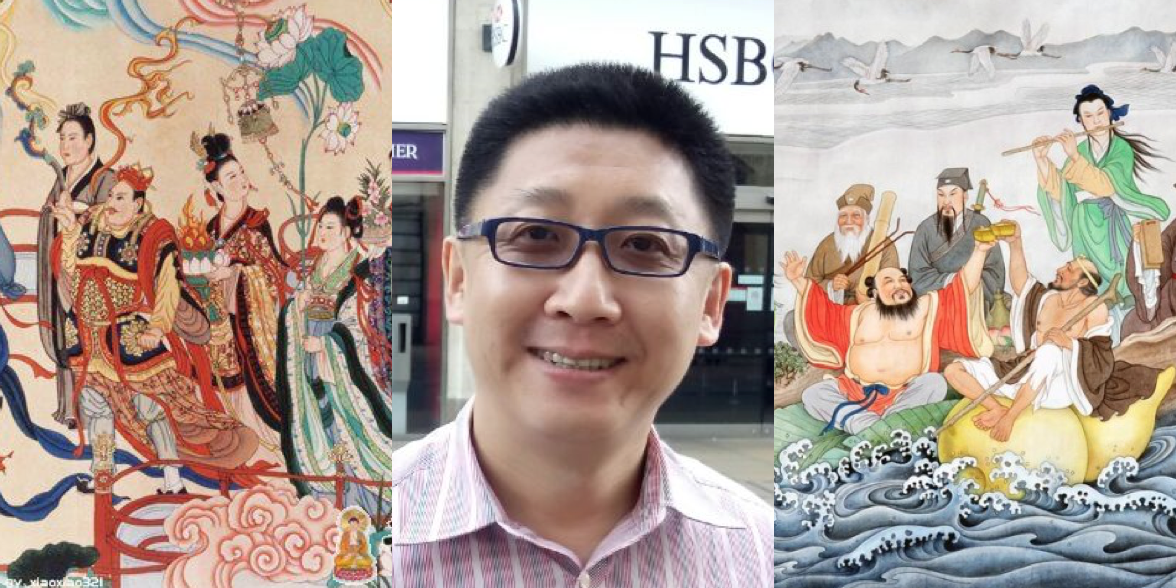
Every time I go to China I learn at least one new thing. On my last visit to Guangzhou, our Head of AI Engineering, Ray Zeng, introduced me to a whole new way of thinking about IT leadership through the concept of ShenXian.
(At this point I have to confess that, unlike Ray, who lives in Hong Kong, but grew up in Shanghai, I am no expert in Chinese culture, so I am sure that I will get some of these ideas wrong: I will let my colleagues from China correct me in the comments.)
My understanding is that the term ShenXian is used to describe two distinct types of heroes, immortals or saints. Shen are beings who have been part of the world since the start of time, or who have been promoted to their divine status through their great feats while they were on earth, often on the battlefield. They might be warriors or generals, and are portrayed flamboyantly, wearing armour or shining clothes. They are often associated with large armies.
Xian are also divine beings, but have reached immortality through meditation or revelation rather than through military prowess. They are associated with spirituality and wisdom and are portrayed in flowing robes. They are not associated with large armies.
What does this have to do with IT leadership?
Ray thought that the parallels were obvious, and I agree with him: these two distinct personas resemble styles of leadership that have been relevant at different times in the IT profession. I think that we can draw four lessons from the concept of ShenXian.
We have all been a bit too Shen
For a long time, in many organisations (although I am sure not in your organisation), IT leadership was about scale. Despite being a technology function, the work done by enterprise IT departments was manual: we developed code manually, tested it manually and deployed it manually on infrastructure which was built manually and managed manually.
In such a world, success and self worth was often measured by the size of the team one led and the size of the budget one managed. In at least some cases, IT leaders were fierce, proud and unapproachable leaders, who were either fixtures in the company, or who had been promoted due to some legendary and glorious performance: perhaps the delivery of an impossible project, or the resolution of a company threatening incident.
Such leaders were, of course, Shen: warlords with the command of armies.
We could all do with being a bit more Xian
However, this has started to change in recent years. Many of those manual tasks have been automated. We have reorganised our teams from big hierarchies into small, autonomous pods or squads.
Increasingly, the success of IT leaders is not determined by the size of the budget or team they manage, but by the value they deliver to their organisation. And that value is determined in turn by their ability to understand technology, to use it to solve their organisation’s problems and help their customers, as well as to run their own function: to use technology to automate the delivery and management of technology. It is not enough any more for IT leaders to be good managers: they must be technical leaders as well.
This means that successful IT leaders of today must become Xian: they must master technical disciplines, and cultivate thought and wisdom.
But we should actually be ShenXian
Ray was keen to make me understand that, while there is a contrast between Shen and Xian, the concept is usually expressed as ShenXian. There is evidently some sort of symbiosis between these two types of being.
And in real life, IT leaders need to balance these two personas. It is no longer enough just to be the commander of armies, to gather headcount and budget to oneself, and to master management skills at the expense of technical skills. But, if we aspire to IT leadership, it is also not enough just to be a thoughtful expert: we must know how to build teams, how to find and empower the best person for every job, and how to lead people.
Of course, it's very hard for any one person to be both Shen and Xian (I know that, as an architect, I am very Xian biased and I lack some Shen strengths). Fortunately, that's why we work in teams: if we are thoughtful about our team construction, we can achieve strength in both attributes across the team.
And we may just be flattering ourselves
Finally, we have to recognise that, while both Shen and Xian are useful analogies, it is not exactly modest to compare ourselves to immortals, heroes and saints. The most important thing for us those of fortunate enough to be in leadership positions to remember, whether we tend more naturally to Shen or more naturally to Xian, is that we are human, and that our real purpose is to serve those whom we lead.
