The biggest step is from zero to one
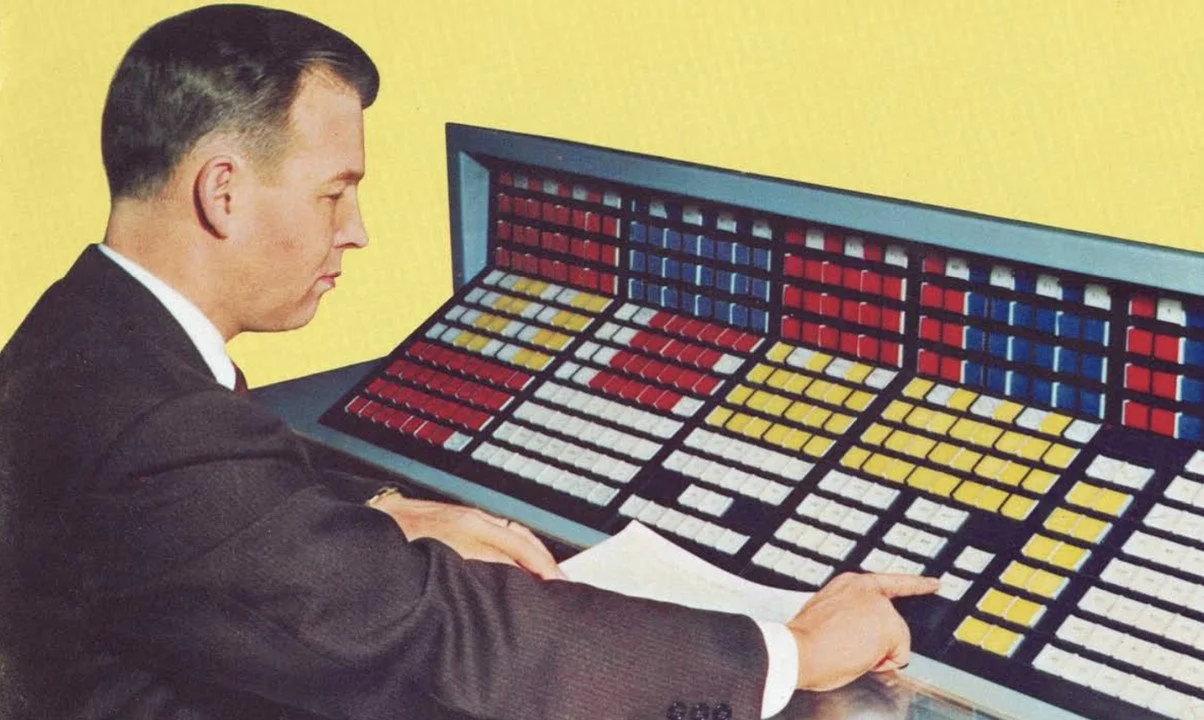
This week I visited our Griffin House office in Sheffield for the last time, before we complete the move to our fantastic new Grosvenor House office a short distance away. The place was part way through packing. Amongst the crates and unplugged machinery, I discovered a print of an article which I guess is from the early 1980s, entitled ‘Into the computer age’and subtitled, ‘Hard on the heels of the Bank’s mechanisation programme came the first commercially viable computers, big enough to fill a room and as mysterious as the switches and dials of Flash Gordon’s space rocket.’
The article lovingly described the purchase of HSBC’s first ever computer in 1961, the English Electric KDP10 (which it turns out, sadly, was not actually a British computer, but a rebadged RCA501 from the USA - computer historians feel free to correct me in the comments), the selection and training of the ‘Magnificent Seven’, the first members of the nascent IT department, and the system of collecting paper tape from machines in branches and shipping them to the computer to be processed.
It also describes some very familiar problems: the need to find and train the right people; projects which took longer and proved more difficult than expected; and the culture shock of asking people to trust a computer in a distant location: ‘Overnight their ledgers were in some computer brain in the West End.’
In 2019 it’s hard not to feel a little superior when reading this articule, or the promotional material for the RCA501. The ‘High Speed Magnetic Core Storage’, which can be expanded from 16,000 to 260,000 characters, hardly seems capacious in the Exabyte era, the weight of 5,000 pounds is hardly portable, and the emphasis on the ‘dynamic colours (which) are introduced to lend interest and help integrate units of the system into a harmonious entity’ just sounds a bit weird. Furthermore, in the age of continuous digital transformation, the shift from paper ledgers to paper tape may not seem particularly profound.
However, this would the wrong attitude to take. That first step - from zero computers to one computer - was one of the most profound technological steps an organisation will ever take. It was, as the title of the article suggests, a step into the computer age.
Many firsts look a little quaint from our privileged positions in the future. The first web page, the first web browser, the first mobile phone. But each of those steps is worthy of reflection and respect, as are the people who make them. I don’t know where the ‘Magnificent Seven’ are today, but they created a movement which has kept moving ever since and shows no sign of slowing down.
It is also worth taking the time to recognise our own firsts. If you work in a technology team in a large enterprise, it is likely that at some point you will do something that no one has ever done before, if not anywhere in the world, then at least in your own organisation. You may be the first person to move data to public Cloud, to train an AI algorithm, or to build an app that makes full use of 5G. It’s pretty certain that those firsts will feel hard, and that they will look primitive and clunky in a few years’ (or even a few months’) time. But you have taken the hardest and most important step: from zero to one.
