The round trip question: a duty to explain

Something has been bothering me: I have been designing, building and running computer systems for over thirty years, and believe that the explosive growth of information technology in that time is a net good for the world. At the same time, I have observed a growing gap in understanding between the people who build and run technology for a living and the people who use it. Information technology touches more people’s lives more deeply every day - yet is increasingly difficult to understand.
I sometimes test this feeling by asking what I call ‘the round trip question’. The question is: when you hit a button on your mobile banking app which tells it to do something (get your balance, make a payment, or some other function), what do you imagine happens? (It doesn’t have to be banking, but it’s the industry I happen to have worked in for longest.)
If I ask this question to a person who works in banking technology, I will usually get an answer which involves API calls, two factor authentication, network traffic over the Internet, and legacy back ends. If I ask this question to a person who works in technology in a different industry, I’ll usually get a similar answer - albeit with less detail on the functional steps and less awareness of the legacy complexity that underpins the process. If I ask this question to a person with no technology background, I will normally either get blank looks, or general references to terms that have made their way into the public consciousness. Effectively, the answer is that magic happens, and that magic bears some esoteric names.
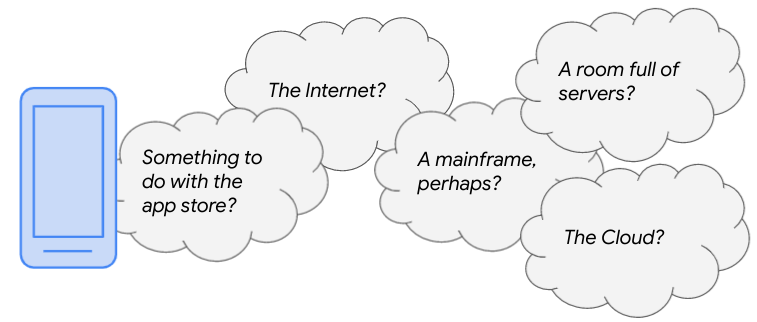
Of course, it is not the fault of people who don’t work in technology that they don’t understand how it works. But, as I said at the beginning of this article, it does bother me. The world is increasingly dependent on the security, reliability and integrity of computer systems, and it doesn’t seem right that the people who use those systems - often including the people who run large businesses - often don't have the information to see them as anything other than a mystery.
I also have to recognise that my own answer to the question is far from complete: there are aspects of the round trip between the mobile app and the legacy back end that are a mystery to me too. I am not a networking or security expert, I take much of the workings of the physical infrastructure of the Internet for granted, and I have never personally coded a mobile app or delved into the mechanics of biometric authentication on my phone. I have some fuzzy patches where magic happens too.
I have spent much of my career as a technology architect, and have always believed that a key part of that role is a mission to explain: to resist the temptation to gloss over how the technology works, and to find the words that make it clear. I increasingly believe that explanation is a duty of all technologists, whatever company or industry they are working in. We have the privilege of building the hidden engines of the world, and the duty to explain them.
Over a series of articles, I’m going to explore the round trip question, and attempt to answer it in terms which I hope that anybody can understand. If you’re a regular reader of this newsletter, you may find some of this rather basic - but I am expecting to discover things that I don’t know, and you may do too. I’ll also try to go behind the scenes and look not just at the technology, but at the people who build and run it, and the ways they work.
I’d be grateful if you could let me know in the comments when I get things wrong, or when I don’t make things clear.
As the title of this blog implies, I believe that, no matter what I have done in my career, I still have a lot to learn: let’s see what we learn on this round trip.
