Through the innovation window
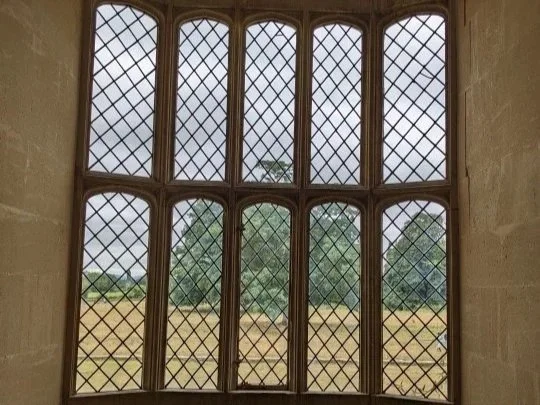
Last week I had the chance to look through a historical pane of glass.
I was visiting Lacock Abbey, the place where Henry Fox Talbot took the first ever photographic negative image in 1835, of a window with latticed leading.
It was a strange feeling, looking through the window which had produced such a significant image. I spent a few moments in reflection, imagining what Fox Talbot must have felt when he first realized that his experiment had worked. Then I took a picture on my phone.
I believe that this historical moment reinforces three important lessons for technologists and innovators today.
Rapid innovation is not new
We often think that we live in an unrivaled age of innovation, that things are changing faster than ever before. In the aggregate, this is right, but we should not overlook those earlier moments in history where the rate of change in a particular field suddenly spiked.
The time when Fox Talbot was inventing his process, and Louis Daguerre was investing the daguerrotype at around the same time, is one such moment. Prior to their work, the only images that most people had ever seen were drawings or paintings. A faithful image of the world, produced by a photochemical reaction, seemed an utterly new thing.
And this new thing swept the world quickly: by 1850 photography was well known enough and popular enough for photographers to make a living taking portraits.
Today, we may experience more changes more often, but we should not underestimate the upheavals experienced by earlier generations.
Incremental innovation can also be fundamental innovation
Neither Daguerre nor Fox Talbot invented photography from scratch: they were both following the work of earlier innovators who had successfully captured images from light. However, these earlier images had problems which made them effectively unusable: they either needed extremely long exposure times, measured in hours, or could not be viewed in strong light, otherwise the image would be obliterated by the continuing chemical reaction.
We sometimes distinguish between incremental innovation (improvements to something that exists) and fundamental innovation (the creation of something new). Daguerre and Fox Talbot could be regarded as making incremental innovations - but those increments were so large that they changed the world.
Today, we should watch for those incremental improvements which are similarly profound: the changes that make the unusable usable, and which bring unreachable goals within our grasp.
Immediate advantages may not be obvious
Initially, Daguerre’s process became more popular more quickly than Fox Tablot’s process. This may be because it produced higher quality images, but might also be because it was easier to understand. A daguerreotype was a faithful, positive representation of the scene or person in front of the camera. A photographic negative was a weird representation, reversed in tone and orientation. Why would you want that when you could have something that was recognizable?
The answer lay in reproduction and longevity. Not only was a daguerrotype fragile, but each was unique: there was no way of making more than one image of the same scene without going through the process all over again. By contrast, by shining light through a negative, a new, positive image could be produced. And reproduced again, And again. And again. The negative was a portable proxy for the scene.
Today, we should think through the implications of the advances we make, and exercise patience before we judge them: their advantages may not be immediately apparent.
It’s a privilege and a wonder to be able to go back to the origins of innovations in this way, to stand on the spot where the world changed. I think we should do this more often, and reflect on what it teaches us: innovation looks to the future, but we should learn from the past.
