Technology architects should learn to spacewalk
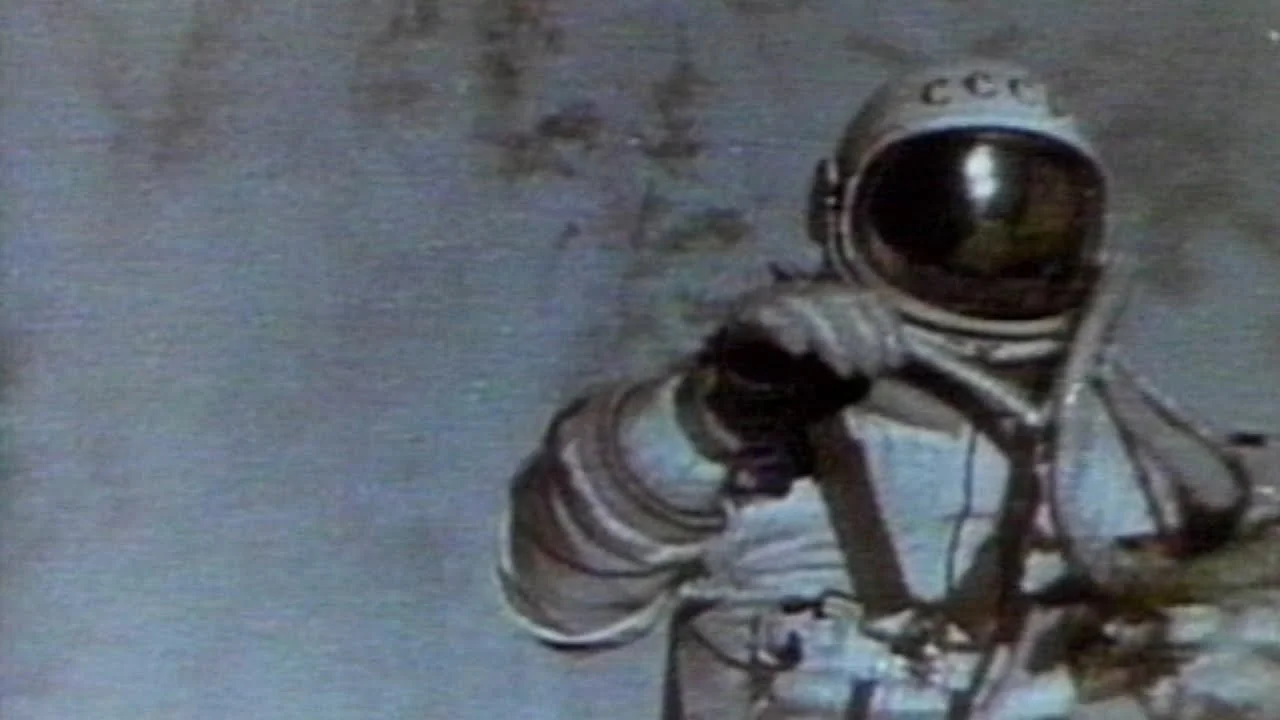
On March 18th, 1965, Alexei Leonov achieved a historic first, but also had a tougher day at work than any of us are ever likely to have.
At 8:34:51 UTC, he left his crew mate Pavel Belyayev behind in their Voskhod 3KD spacecraft, and stepped through the outer airlock hatch to become the first human to walk in space. Like many advances in space exploration, this moment represented a shift in humanity’s place in the universe: for the first time, one of us had stepped outside the bubble of atmosphere brought from the surface, and into the cosmos. Of course, Leonov still brought some of Earth’s atmosphere with him in his spacesuit, but he was as close as any of us will ever be to surviving outside a spacecraft in the vacuum of space.
His tough day started when he tried to get back through the airlock hatch: his suit had swelled so much in the zero pressure environment that his fingers no longer reached the end of his gloves, his feet were no longer in his boots, and he couldn’t fit through the hatch. With the calmness and resourcefulness of many astronauts, he took the terrifying decision to vent some of his oxygen, to leak away the thing that was keeping him alive, to get back into the spacecraft.
He made it back in, but that was only the start of Leonov and Belyayev’s troubles. Their guidance system malfunctioned, forcing them to make an extra orbit before attempting to land – all while mission command thought that they had already landed. During re-entry, their landing module remained tethered to their orbital module, sending them into a spin before the tether snapped. They finally landed in Siberia in winter, and could not be rescued until the following day, after spending a night in freezing temperatures in flight suits soaked with sweat. And they were in an area prowled by wolves and bears.
But they made it, and humanity had taken another step towards the stars.
None of us working as technology architects in large companies are ever likely to have a day like that.
But we should draw a lesson from the spirit of curiosity, courage, exploration, technical excellence and problem solving shown by Leonov and Belyayev.
When we work to transform large companies, to solve multi-dimensional problems within a matrix organisation, to consider the potential of new technologies for our enterprise, we often discover large areas of empty space. Everybody knows about problem A, but nobody has any idea how to fix it, so it goes untouched. Work B is at the intersection of two teams, so nobody does it. Technology C sounds like it might be important to us, but it’s so hard to understand, we can’t figure out how to get started.
It can be tempting to leave this empty space unexplored, and that is what a lot of people do. (After all, we’re all really busy: who needs more work? And, in a large organisation, surely somebody else will figure it out and take action. There are plenty of other people around: it’s probably best to leave it up to one of them.)
I believe that, as professional technologists, and particularly as technology architects, we should be attracted rather than repelled by areas of empty space. We should view them as opportunities to step in, to clarify, to solve problems, to take ownership, to figure out what we should do and how our organisations could be better.
This is, of course, not always an easy thing to do. No corporate environment is as hostile as the vacuum of space, but stepping into empty space requires thought, preparation and a life support system. If you find a truly empty space in your organisation, a place which no-one else is prepared to explore or take accountability for, it will probably lack funding and resources. It will probably be cold and lonely. You will need to bring enough time and energy to survive the exploration, to make it back alive and tell others what you have found and what you think we should do.
This is one of the reasons why technology architects make good explorers. There typically aren’t that many of us, and we don’t require much care and feeding. Our life support mechanisms are lighter than many other parts of the technology organisation, and we have enough curiosity to rush in where angels fear to tread (and you can figure out what that sometimes makes us).
Like Leonov, though, you might find that it’s harder to get back into the warmth and light of your spacecraft than you expected. One of the curious features of stepping into areas of accountability that no-one else wanted to explore, is that once you are there, everyone is suddenly grateful, and you are the owner of a whole bunch of problems you barely knew existed. At this point, it’s worth remembering that solving those problems may be the most valuable thing that you can do for the organisation.
And if you need any reminders to stay calm and cool while you deal with the unexpected problems you will find in empty space, it is worth remembering Leonov’s terse summary of his brushes with death by suffocation, burning, high Gs, impact, freezing and wolves: ‘Provided with a special suit, man can survive and work in open space. Thank you for your attention.’
You can read his story here.
