Architecture as education: share your superpowers
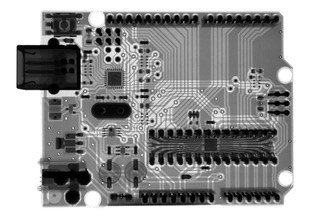
Learning new technology skills is like getting x-ray vision.
I don’t know how you learn coding skills, but for me it goes something like this (I should stress that nobody pays me to write code any more, so this is all for my own education or for non-profits):
Realise that I need to do <something> that I don’t know how to do.
Search the Internet and find the frameworks or libraries that everybody else seems to use to do <something>.
Scan the documentation and panic. Experience the usual feeling that I have no idea what I’m doing.
Try to figure out how to do <something> on my own, before realising once again that I’m trying to recreate something the community has already done much better.
Have another go, carefully reading blogs and forums, cutting and pasting code without really understanding it.
Just about get it to work, but feel that I am reliant on luck and witchcraft.
Make a small change and break everything.
Go back to the documentation, grind through, and figure out what went wrong.
Slowly realise that I am beginning to grasp the concepts and feel more comfortable.
Gain fluency and confidence. Wonder why I ever found this so confusing.
Realise that learning this library or framework has given me greater understanding of other, related concepts I didn’t fully understand.
(Still need to check the Internet each time I do something I haven’t done for a few days, but don’t feel guilty: the Internet is our memory now).
Of course, this sequence is accompanied by a lot more bad language and shouting, and the feeling of fluency and confidence only lasts until I realise that I need to do <another thing> that I don’t know how to do.
But it also feels like acquiring x-ray vision. Something that was opaque and impenetrable suddenly has clarity and depth. And, just as it is difficult to imagine not being able to see if you have sight, it is difficult to imagine not understanding something you now understand.
I think that this common experience contains two important lessons for technology architects. First, it should give us heart when we encounter new technology we don’t understand. For me, this happens about twice a day.
Being a technology architect can feel overwhelming at times. If we are doing our jobs well, then people around us will frequently turn to us for guidance. But if we are doing our jobs well, we will also frequently find ourselves on the frontier of our understanding, and poorly equipped to give that guidance. In such circumstances, we should be humble enough to seek the expertise of others, but should also be curious enough to learn that expertise for ourselves. And, once we learn enough, we will find that we can see through walls.
The second lesson is more important, though. When you are fluent and confident in a wide range of technologies, it is easy to forget that other people have not yet acquired the same x-ray vision that you have. And if you are a technology architect who has been working in the field for years, you may not realise just how powerful your x-ray vision is.
Most of us who are technology architects have been in the situation where you are explaining something to a group of people, and you suddenly realise that no-one understands what you are saying. Sometimes this is due to our communication skills, but it may also be because we have inadvertently placed ourselves on the other side of a wall they can’t see through, without realinse that the wall was even there.
If you ever doubt the power of your x-ray vision, or forget that your x-ray vision is turned on all the time by default, try asking anybody who does not have a background in technology what happens when they click a link in a browser on their phone. I expect that you will be surprised at the limited understanding which most people have. But, if you do this, make sure that you are not being patronising or condescending, or making fun of someone for their ignorance: this exercise is to educate you on how big your job is when explaining technology to non-technologists.
Fortunately, as we have seen, even when faced with impenetrable walls it is possible to acquire x-ray vision, although it takes curiosity, time, patience - and access to someone who is willing to teach. I believe that, as technology architects, we are privileged to work in a field which gives us x-ray vision, and which forces us to sharpen that vision every day. Communication mastery is one the three dimensions of Zang Jing Ge, and teaching is an essential part of communication. It our duty to place ourselves in front of the wall alongside those who can’t see through it, and to transfer our skills: to teach x-ray vision.
