There’s no nostalgia like computing nostalgia
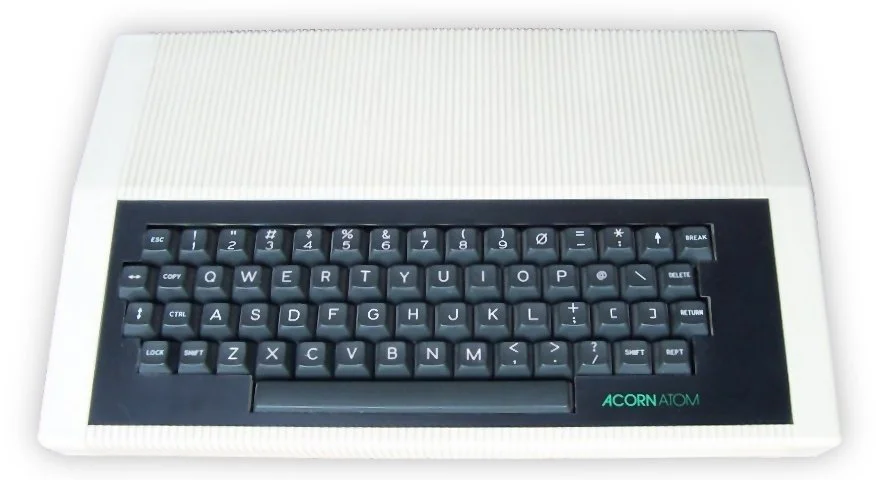
It's development week in HSBC Technology, so I'm sharing the very first computer learning experience.
I learnt to code in BASIC on an Acorn Atom (a British microcomputer) when I was 12 years old, in 1980. I had been pestering my parents for months to buy me a computer (learning BASIC from books and trying to imagine the programs in my head wasn’t really cutting it). Switching on the machine in all its 12KB glory, (along with a portable black and white TV and a cassette tape recorder) and seeing the cursor awaiting my commands was a powerful experience.
Why does this experience from the dawn of my career matter today, though?
In the HSBC Technology leadership team, we believe that everyone should remain a hands-on technologist, no matter how senior they get in the organisation. We also realise that this has not always been the case in enterprise IT teams: for many years, the more senior people got, the more distant they got from technology, and the more they focused on managing people, finance and processes. And we realise that this is as true of us as of most people in our profession.
In our ongoing campaign to rediscover our technical roots, we recently conducted a simple exercise. We all shared our first Command Line Experience (CLE): the first time we entered instructions (of any form) into a computer (of any form) and got it to do something. We shared the year our first CLE took place, our age at the time, the machine we were using, and the language we used.
My first CLE was the moment I describe above: turning on the microcomputer that was going to occupy much of my waking time for the next few years.
Across twenty one people (it’s a big technology leadership team for a big company), we got some interesting results.
Formative Computing Experiences Were Universal
First, everyone had had a CLE at some point in their lives. This was slightly surprising, as the team includes people from Legal, Audit, HR, Communications and Finance functions. But it was great to find out that there was a proper technologist there somewhere in everybody.
Second, although the experiences covered a big span of time - twenty five years from 1976 to 1991 - the age at which most people started was fairly consistent. The earliest start was at nine years old; the oldest was at twenty two; but most people got their start in their early teens, between eleven and fourteen.
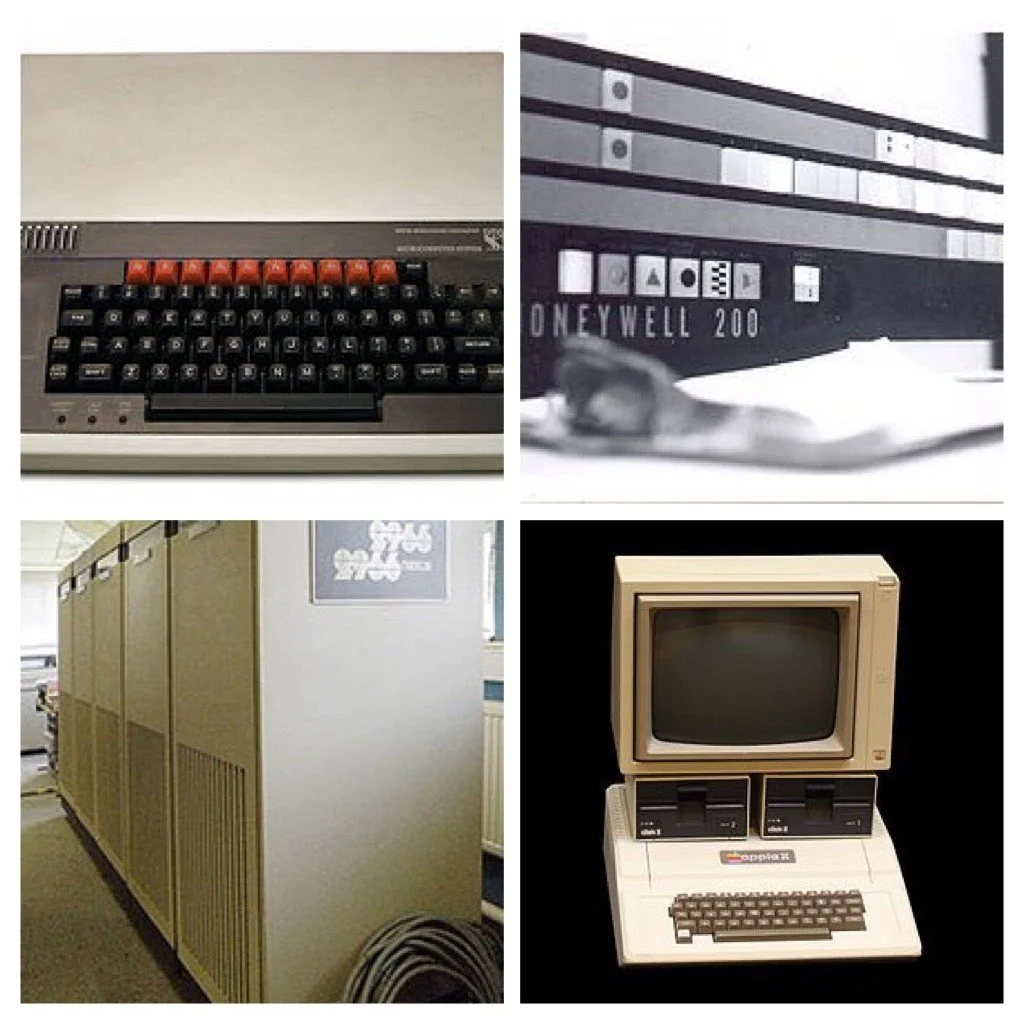
Third, those twenty five years fell into three distinct eras: before 1980, when people mostly learnt on time shared mainframes, such as the Honeywell H200, the ICL 2900 or the Sperry Univac; from around 1980 to 1990, when people learnt on individual microcomputers, such as the Commodore 64, BBC Micro and Apple II, usually in BASIC; and from 1990 onwards, when people mostly learnt on PCs, and technologies such as Dbase and the first indications of the Internet era such as HTML appear.
Fourth, up until the PC era, most people had vivid memories of the exact model of machine they learnt on. Once into the PC era, everything got blurred into ‘just another PC’. Those early machines seem to have had a lot more personality.
However, the most important finding was when we turned from the facts of our CLE and considered our emotions: how we felt at the time, and how we feel now, remembering the experience.
Nostalgia is an Energy
The feelings at the time (if we can trust our memories) were universally of excitement, a heady feeling of control that we could get a sophisticated machine to follow our instructions, even if those instructions were trivial. There’s a reason that ‘Hello World’ persists: aside from being simple, it’s a signal that we have some sort of control of the technology in our hands.
The feelings now were of nostalgia, and an itch to open up a text editor or a terminal window and get something done. It was a reminder that, whatever management tasks take up our days, we got into this field because we enjoy technology, and because computers are fun.
As well as remembering our first CLE, we also all committed to find our next CLE: the next opportunity to put ourselves back at the command line using the current generation of technology, to ensure that we are correcting the drift of decades away from a focus on technology and towards general management.
We are still managers and leaders: our jobs are still to manage and lead people and processes as well as technology. But our ongoing enagement with the command line will make us better at those jobs - and make them more fun.
What was your first CLE?
