Curious humans help each other think better
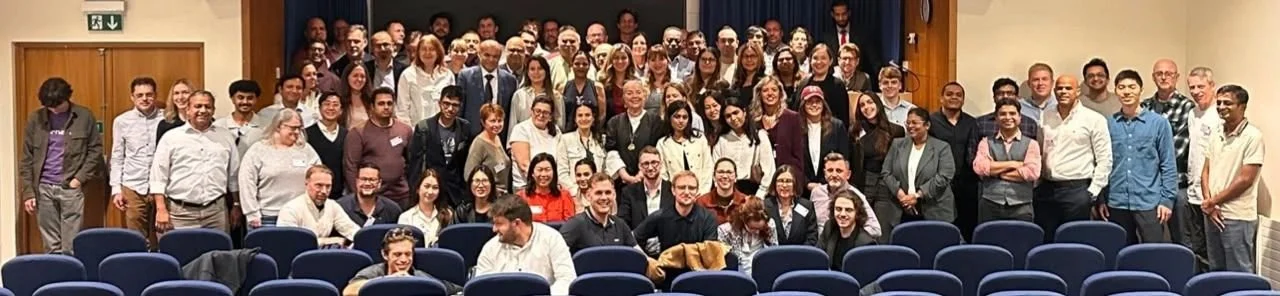
I was privileged to attend and speak at the AI Summit in Oxford last week (with huge thanks to Ajit Jaokar and the rest of the team for making it happen). As ever, I learnt a lot from the formal presentations, and even more from the conversations during breaks. However, the moments that really shaped my thinking were those which challenged my preconceptions. Here are three of those challenges:
Why don’t you like the Stoics?
In my own keynote session, I talked about one of my favourite topics: AI ethics, and how we can use ideas about virtue, vice and flourishing to develop a rounded, flexible and human response to the challenges of new technology. (I also wrote about this last week.) In that talk, I dismissed other forms of philosophy that seem to be popular in Silicon Valley, particularly utilitarianism (too concerned with optimisation), deontology (too focused on finding rules which probably don’t exist) and Stoicism. I also rashly promised, that I would explain my antipathy to these schools of thought during the break.
When asked to fulfil that promise, I found that I couldn’t really explain my unease with Stoicism: it mostly stemmed from a feeling that it was popular with tech bros who wanted to cosplay as Roman generals. But the level of interest made me do some quick overnight revision, with the goal of either coming up with a better argument or admitting that I was wrong.
As it turned out, that revision did support my impressions: it reminded me that the Stoic conception of virtue is based solely on reason, insists that the virtuous person is invulnerable to the catastrophes of age and circumstance, and situates them as an aloof and isolated paragon, outside the family and society. I can see why this image appeals to CEOs and would-be billionaires, but I still prefer the Aristotelian conception of virtue which, while it is far from perfect, situates the virtuous person in society, gives prominence to emotion, and human values such as friendship, and allows that even the best of us are subject to age and misfortune.
However, the challenge to my views also reminded me that it’s best to ground your position in understanding rather than vibes, and that, if I’m going to make assertions from a stage, I had better know why I am making them.
Are you wrong (again) about autonomous vehicles?
Paul Newman, Professor of Robotics at Oxford, led an energising session on the state and future of robotics. It changed my thinking about the importance of embodied, physical intelligence. For someone like me, who has mostly built systems which are composed purely of software and data, which present digital interfaces and manipulate digital assets, it is easy to be ignorant of the world of physical things (except as consumers).
In particular, it showed me that I was probably wrong about autonomous vehicles. I used to be very optimistic about autonomous cars, and expected that they would have already become widespread a few years ago. That didn’t happen, and I had come to believe that there were fundamental barriers that would prevent current forms of AI coping with the continuous parade of novelty that we encounter on the roads.
That might still be true. However, Professor Newman explained how he had switched his own work on autonomous vehicles from roads to industrial settings, such as mines, docks, airports and factories. In these much more controlled and predictable environments, autonomous driving was proving to be viable. Furthermore, it was turning out to have effects which fundamentally changed the economics and impact of the vehicles: for example, autonomous container carriers in ports could distribute the erosion of the concrete docks by recording and adjusting the placement of containers.
This experience reminded me that the environment I live in is not the only environment in the world, and that other environments have other problems and other solutions, which I may not even be aware of.
Why are you sceptical about AI in the classroom?
Finally, two students from India, dhanashri sunil deokar and Swastika Kuldeep Jagtap . , presented research which changed my thinking about the use of AI in the classroom. They set out to find ways to improve AI literacy, not solely by teaching AI, but by incorporating AI into other subjects. In particular, they created an interactive AI learning experience based on chapters of a physics textbook being taught to young students. In a small pilot, they found that, not only was there an improvement in test scores, but that the students’ attitude to both AI and physics shifted: they became enthusiastic explorers and experimenters.
I must admit to having some initial scepticism about the use of AI in the classroom: I worry that it will be used to replace rather than augment learning and critical thinking, and that students will become dependent on AI. However, this research showed me that, once again, I must remember to think outside my own context. In this case, the AI was not replacing deep research and one to one tuition: it was replacing traditional learning from a textbook and focused questions on that text, a mode which many students found dry and unengaging.
These experiences show that, as yet, there is no substitute for humans talking to one another, questioning, challenging and probing each others’ ideas. The need to respond to a respectful and curious interlocutor forces us to think harder about what we are saying and why we are saying it. I guess that has been part of the history of Oxford University since it began: let’s make sure it continues in the age of AI.
