Beware the SMAC trap
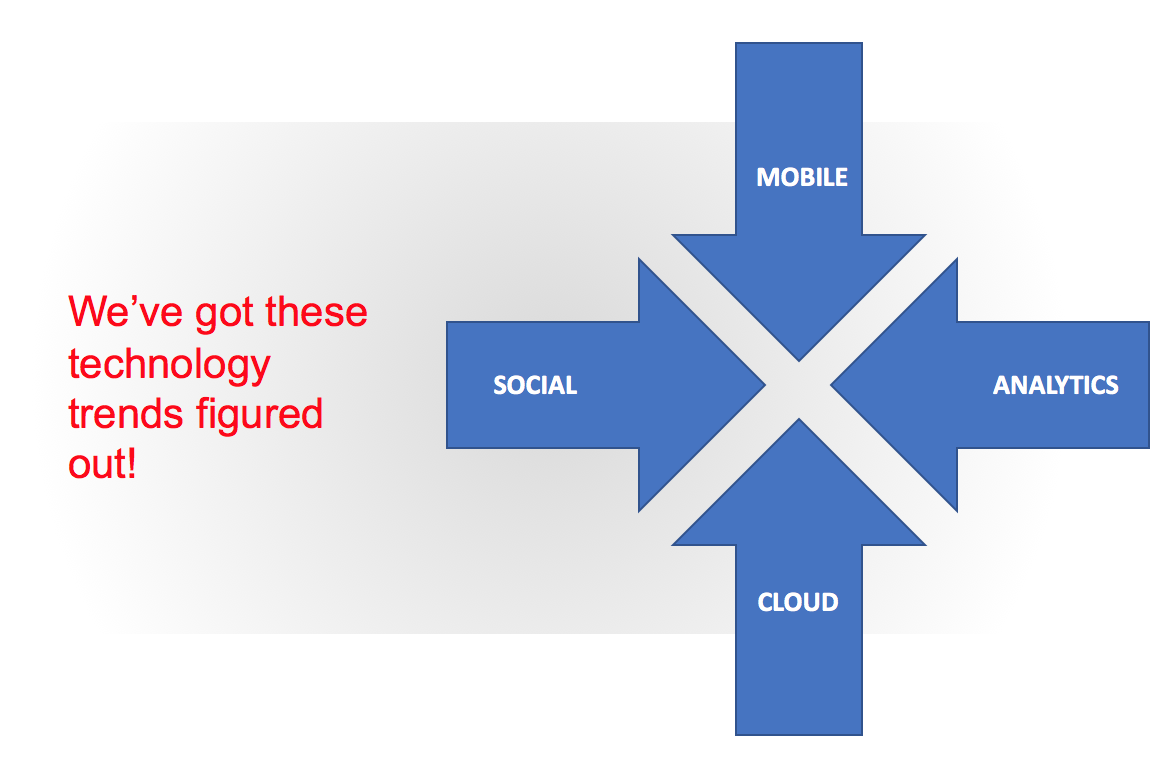
Terms such as SMAC are a tool and a trap.
SMAC stands for Social, Mobile, Analytics and Cloud. It seems to have been coined sometime between 2010 and 2012, but it’s difficult to find its first usage. The idea behind SMAC seems to have come from Gartner’s research on what they call ‘the Nexus of Forces’, although that research talks about Mobile, Social, Cloud and Information (I guess that SMAC is more catchy than MSCI).
The idea behind the term is useful: there are technology trends which are reshaping our world and our businesses, and these trends amplify each other rather than acting in isolation. For example: social media provides new ways for us to connect and communicate; social media on mobile makes it ubiquitous; analytics applied to social media on mobile gives unparalleled insight into our behaviour and preferences; and Cloud provides the storage and compute capacity required to run an analytics driven social network accessed continuously through mobile devices.
This is a helpful way of thinking, which encourages us to look beyond the implications of an individual trend, and use our imaginations to consider how trends reinforce each other.
It can be dangerous, though, if it leads us to believe that, by giving a set of technology trends a label, we understand them fully, and that we have somehow tamed and bounded the field of technology innovation.
Many people have fallen into this trap. For a while, some technology companies organised their product divisions and their client propositions around SMAC. They gave their sales teams incentives to sell products and work related to SMAC. Some client organisations structured their technology strategies and research efforts around SMAC.
And it didn’t take long for them to realise that SMAC wasn’t up to the job, because new, important technology trends kept turning up at ever greater pace. Should they should use the term SMACI to accommodate the Internet of Things? And SMACIAI (or SMACIML?) to accommodate developments in Artifical Intelligence and Machine Learning? Or SMACCIAI to recognise that ‘C’ can stand for ‘cybersecurity’ as well as Cloud? And what about robotics? And biometrics? And the thing we haven’t heard of today but will be talking about tomorrow?
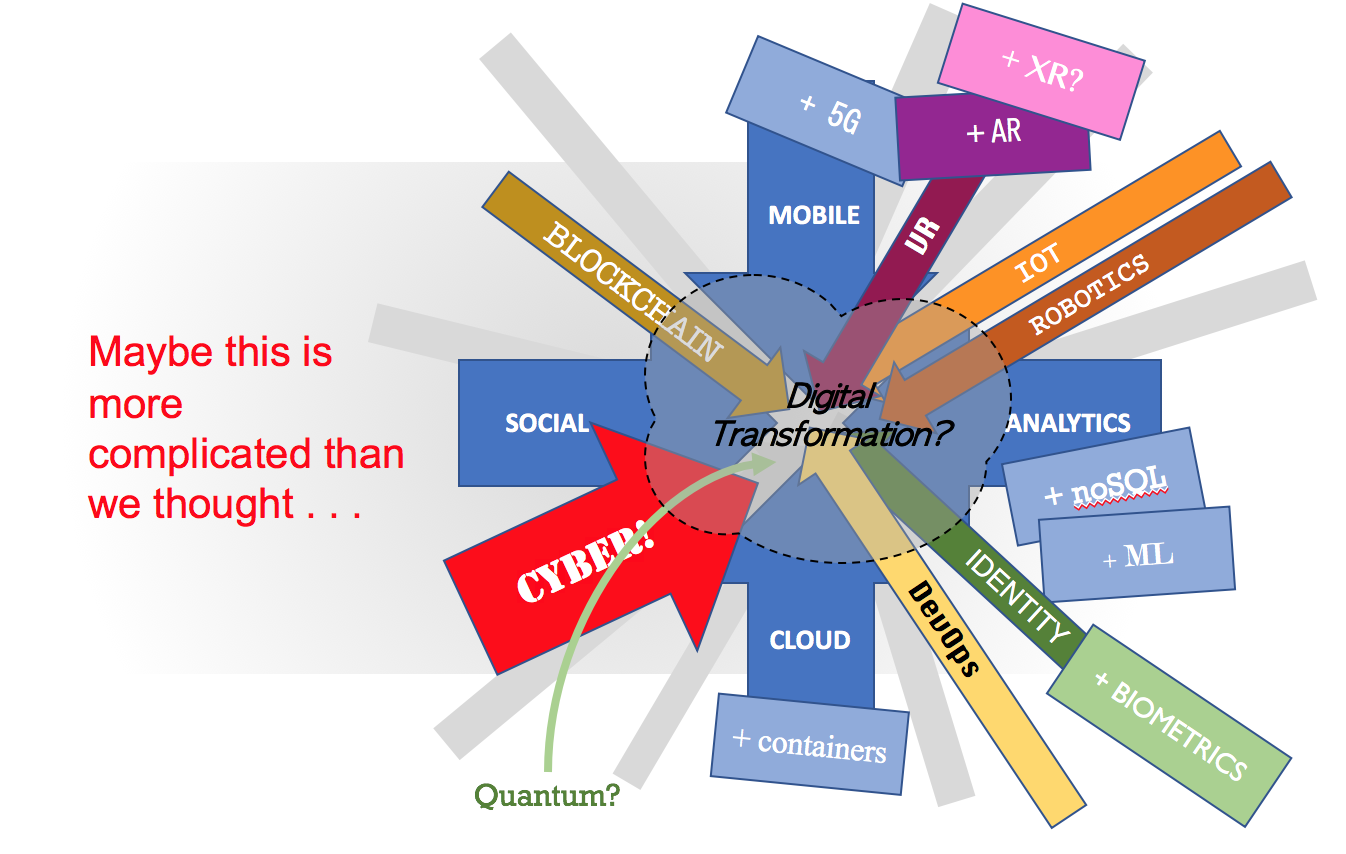
I am sure that the term SMAC is still in use somewhere, but I haven’t heard it in many pitches recently: it hasn’t kept up with reality. Nothing ages faster than a vision of the future.
The story of SMAC is just one example of a common trap. Other recent examples include ABC (AI, Blockchain and Cloud) and NBIC (nanotechnology, biotechnology, information technology and cognitive science). It is a natural human tendency to give names and labels to concepts, and a natural human hope that, by applying labels and concepts we can bring stability and order to inherently unstable fields. Even for professional technologists, the pace of technology change can be disconcerting, and it can be tempting to believe that, by inventing labels, we can pin things down for long enough to figure out what they mean. The problem is that innovation is not bound by our labels.
It is not a bad thing to invent concepts and terms to help us talk and reason about complex and novel topics. It is only a bad thing if we come to believe that these concepts and terms define reality rather than reflect reality, and if we let them bound our imagination rather than stimulate our imagination.
There is a lesson here for Technology architects. We live in a world rich in concepts and rich in jargon. We are subject to proposals and pitches from people inside and outside our companies who want us to buy their concepts. We have to maximise the value of our existing technology and maximise the potential of new technology. We have to communicate complex ideas to people who are not experts in our field. Easy labels are especially tempting and seductive to people like us. Like so many things in our field, we should approach them with a combination of caution and thought, curiosity and imagination, and make sure that they are a tool and not a trap.
