Work things out by writing them down
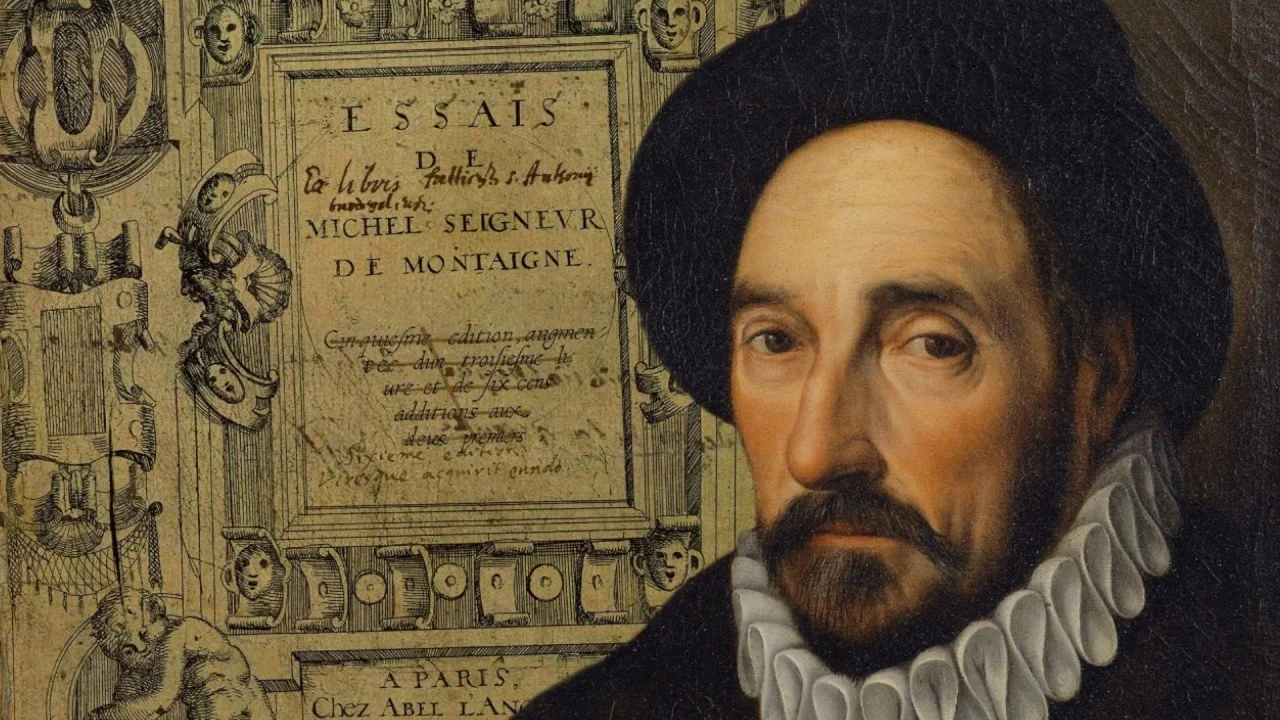
On 28th February 1571, Michel de Montaigne retired to a tower in the Dordogne and began to write his Essays: reflections and explorations of such grand concepts as age, friendship and vanity, as well as more basic matters such as smells, drunkenness and the custom of wearing clothes. Montaigne called these explorations essays (essais in French) as he considered them to be trials (from essayer): ways of testing his own ideas, particularly his own understanding of himself, by writing things down. As a result, these essays - these trials - are digressive, discursive and full of both insight and contradiction.
There are many lessons we can learn from Montaigne, and many of his essays are surprisingly readable near 450 years later. However, I believe that the most important lesson which IT architects can learn comes from the nature of Montaigne’s whole endeavour: the importance of working things out by writing them down.
As IT architects we spend our time dealing with complex problems, many of which no-one has ever solved before. And, as IT architects, we have thee important jobs: to figure out what the answers are; to communicate those answers to others; and to lead the thinking of the team through to implementation. (These are, of course, the three attributes of Zang Jing Ge, the model of architecture excellence we follow in the HSBC architecture team).
We adopt a variety of techniques to achieve these goals. We build many different types of models: data models, process models, functional models and so on. We build scorecards and tables to help us evaluate options with some degree of objectivity. Notoriously, we create presentations which attempt to frame a narrative supported by compelling visuals. And we wrap all this up into long papers and documents intended to support decision making.
If we are honest with ourselves, we know that these techniques are not always successful. They do not always show how derive clear decisions from good design, or create understanding and agreement in their audience. Instead, we often find ourselves in a state of confusion, without a clear idea of how we got there.
We must recognise that this is hard. It is hard to solve complex problems, hard to communicate complex ideas in simple terms, and hard to keep people heading on a complex path which no-one has ever taken before. If it was easy, our jobs would not be so interesting.
But we can make things easier for ourselves by learning Montaigne’s lesson.
If you read Montaigne’s essays, particularly the later ones, which roam widely, and for which the title and supposed subject are no more than a starting point, you get the feeling of thoughts forming, of somebody working something out. Montaigne deliberately puts his thought processes, his trials, directly in front of us.
"I distrust my present thoughts hardly less than my past ones and my second or third thoughts hardly less than my first." - Michel de Montaigne, Of Vanity
I think that, on a more modest scale, all of us have the same experience when we try to write down our thoughts in unconstrained but clear prose. Writing is just as much a process of discovery as it is of expression. I know that often when I try to write down a chain of reasoning which seems clear in my head, it does not make sense on paper, or cannot even be formed into clear sentences. I also know that, when I do manage to mould my half formed thoughts into sentences, I find connections and ideas which I did not know I had. And, finally, I know that if I had expressed the same half formed thoughts as a set of abbreviated bullet points, I probably would have got away with it.
This is not an argument that we should always use Word documents rather than PowerPoint presentations: I don’t think that it matters whether our thoughts are presented in portrait or landscape format. But it is an argument that we should not try to use tools intended for sharing finished, polished and formatted reasoning, when we have not yet discovered what that reasoning is.
New Year’s resolutions can be dangerous, but a good one for this year might be that, in 2019, before we reach for the mouse, we will get in the habit of reaching for the pen, and giving our thoughts an essai.
