Let’s (not) do the time warp again
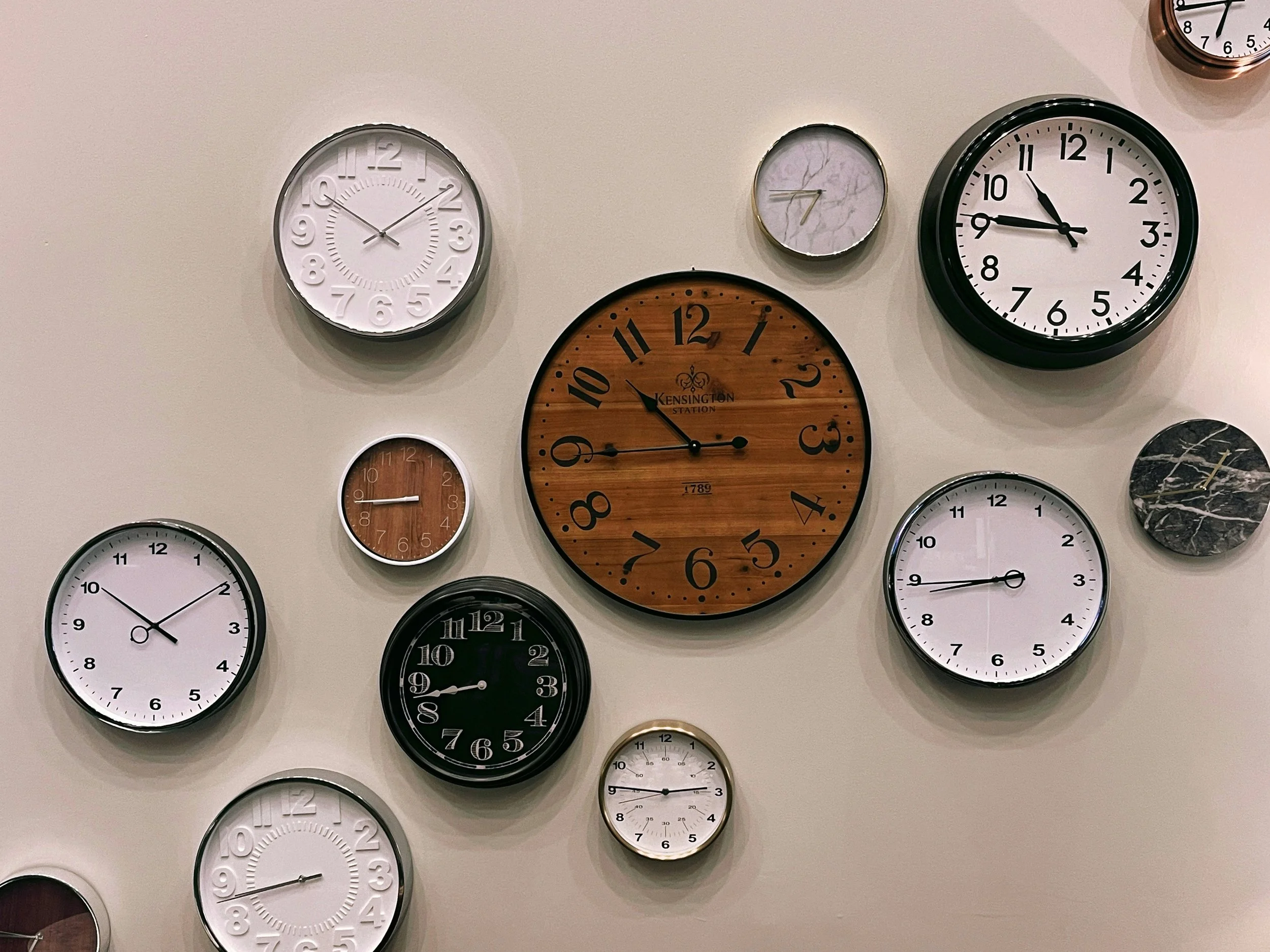
Photo credit: Jon Tyson via Unsplash
How long has 2020 been for you? How long was the last week? Or the last month? Or the last hour?
If your experience has been anything like mine, none of our experience of time has felt anything like normal this year. Hours have dragged until days felt like weeks - while weeks and months have flown by like minutes and seconds. It simultaneously feels impossible that it is already December, and impossible that March 2020 was only nine months ago.
A recently published research paper based on the UK showed that 80% of survey respondents reporting experiencing distorted time during lockdown, and found that experience of distortion correlated with factors such as stress, insecurity and continuity and complexity of work. I am sure that further research into this phenomenon will follow, and that one of the small silver linings of this tragic year will be an improved understanding of this dimension of human experience and perception.
However this research develops, though, we can draw from this experience the lesson that our perception of time is highly subjective and determined by our circumstances.
Is there any way in which we can put this lesson to work in the enterprise, other than helping us understand why a day full of boring meetings feels long while, in hindsight, on Friday after a week full of boring meetings, we wonder where the time went?
I think that it can help us when we consider that, in the enterprise, time is a frequent factor in decision making. We decide how long we are prepared to wait for a feature. We measure the frequency of releases over time. We balance time, cost, quality and scope.
We usually try to convince ourselves that we are being wholly rational when we make these decisions: we gather estimates and analysis, we weigh options and we seek counsel. Yet our experience of 2020, as well as much other research, has taught that we are not wholly dispassionate decision makers, especially when it comes to time. Our feelings have a strong influence on us, and our perception of time can have a strong influence on our feelings.
If you have ever worked on a project with tight deadlines, I am sure that you have experienced the dilation and contraction of time. The time taken to mobilise and get started feels interminable, while time just before a release or other major milestone passes faster than you ever expected. Do we value time at the beginning of the work in the same way that we value time at the end of the work? Should we value the passage of time in both these stages in the same way?
I don’t know of a way for us to change our perception of time, and I don’t know exactly how we should value time in different circumstances. But I do think that one step to better decision making is to recognise just how subjective our experience is, and just how much it can be influenced by circumstance: a lesson that should be difficult to forget given the extraordinary circumstances of this difficult year.
