Embrace the glorious art of architectural procrastination
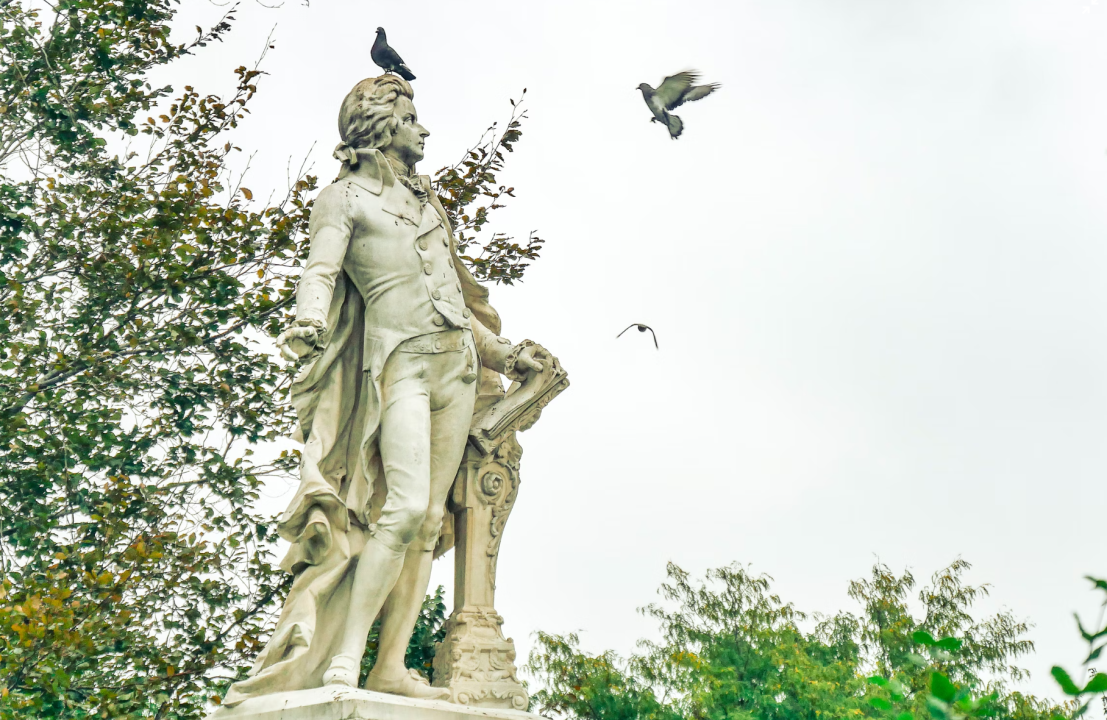
According to legend, the night before the opera Don Giovanni was due to open, it was still not finished. But Mozart was not locked in his room, desperately seeking inspiration: he was out with his friends. When they finally convinced him to go home and finish his work, he completed the opera in a few hours, so late that the orchestra was handed still-wet copies of the music as the curtain went up, and had no time for rehearsal. ‘Some notes fell under the stands,’ said Mozart, ‘but it went well.’
I don’t know how much of this story is true. There is documentary evidence: Mozart recorded the completion of the opera in his own catalogue of works the day before the first performance. But the story has the air of embellishment: we would love to believe the tale of the mercurial genius dashing off a masterwork with only moments to spare.
True or not, I think that this story should prompt us to think about our own approach to decision making, especially for technology architects. I wrote last week about the James Webb Space Telescope as an extreme example of decisions that had to be taken early: once the telescope was on its way to space, there was no time to fiddle with the design. Mozart’s composition of Don Giovanni is an extreme example of the opposite: taking decisions at the last responsible moment (or, in Mozart’s case, what seems more like the last irresponsible moment).
As technology architects, I don’t think we ask ourselves often enough when it is the right time to take decisions. And, unless we are being driven by consequences and clarity, then I think that the right answer is often, ‘not today’.
Unfortunately, much of the way we organise work and technology architecture in large enterprises drives premature decision making. In projects and large programmes, particularly those which follow a waterfall lifecycle, there will often be a design phase where we are expected to have everything figured out, on the presumption that we can’t start building until we have laid out all of our tools and materials. Outside projects and programmes, technology architects (and their sponsors and internal customers) still have a fondness for multi-year roadmaps, and for future state architectures which often describe a state which will never be achieved. We have a desire to control the future, even when we barely have a grip on today.
I believe that if we resist these habits, pressures and desires, we can make better and more useful decisions. I believe this for three reasons.
First, upfront decision making concentrates our choices at the point of maximum ignorance: the point when we have least experience with whatever we are trying to reason about. This is true even when we are experienced in the topic (we can always gain more experience), but is especially true when we are trying to figure new things out. Of course, we usually attempt to compensate for our ignorance through analysis (for example, intense evaluation and scoring processes for new software purchases), but that brings me to reason number two . . .
Second, deferred decisions help us break free of the tyranny of the process. Processes are not bad. Analysis is not bad. They are both ways to rationally address topics that we don’t understand, with structure and discipline. But all processes have a tendency to acquire a momentum of their own, to dominate the way in which we frame the problem. Have you ever participated in a vendor selection process where you have felt that perhaps none of the options on offer are the right choice - but the process now has structures and deadlines and steering committees, and it becomes very hard to step back and consider going another way? Perhaps, if we are obliged to follow decision making processes, then we should add a process step which asks whether we can get away without making this decision today.
Third, delaying decisions creates room for inspiration. Structured decision making processes are not the only way to think about problems. Mozart understood that our best ideas often come to us when we are doing something else, saying that, ‘when I feel well and in a good humour, or when I am taking a drive or walking after a good meal, or in the night when I cannot sleep, thoughts crowd into my mind as easily as my mind might wish.’ Sometimes we just need to give our brains space to find new answers - and then we can take good decisions.
There is one thing better than a decision taken at the right time, though: that’s the decision that you never have to take. I’ll write about those types of decisions in next week’s article.
