Architecture or archaeology?
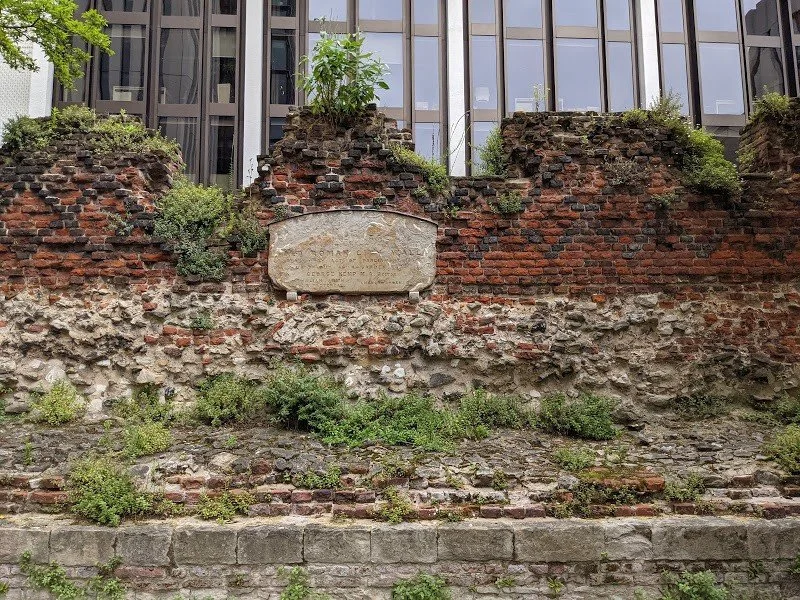
Last weekend my wife and I visited London together for the first time in several months. As well as having the chance to eat in great restaurants and see inspiring art, we did one of our favourite and simplest things: wandered the streets of a city which we have visited thousands of times, but where there is always something new to see. This time, we happened to be walking along London Wall. This is one of those streets where you can see history piled on top of itself: the remnants of the Roman wall next to the ruins of a medieval hospital, near a Victorian building, all in the shadow of skyscrapers from this and last century.
As ever, this reminded me of the work of technology architecture. While the history of computing is much shorter than the history of London, we have our own layers of technology from different ages. In banking, for example, a customer might initiate a payment from a mobile app which was updated yesterday, calling APIs which were built a couple of years ago, running on a five year old gateway, routing messages into queues that have been in existence for over a decade, before triggering a transaction in a back-end that was developed in the 1980s. And all that history is played out when the response is sent back. It might not be apparent to the end user, but performing a simple operation on their phone can be like sending a boomerang into the past.
Technology architects often lament that they have to work with layers of history, and wish that architecture was less like archaeology - that we had fewer constraints imposed by decisions made in a different age, and that we didn’t have to spend as much time figuring out the intentions of our predecessors (even when we were those predecessors). I don’t think that we should lose our desire to upgrade, refresh, re-factor and re-architect. But I also think that we should learn from our own experience as amateur archaeologists. More specifically, I think we should remember that we are building tomorrow’s archaeology today, put ourselves in the shoes of those future architects and do two things: assume longevity and leave records.
Assume Longevity
All enterprise technology lasts longer than we ever thought it would. I was recently attending a virtual event with a group of senior architects, and we all shared stories of how code we wrote at the very beginning of our careers came back to haunt us many years later - and in some cases is still running. (And we showed the usual mix of pride - my code is still running after all these years - and horror - my code is still running after all these years!)
When we design solutions, we have to design for the goals and constraints of today, but we should also remember that our solutions will have to survive and operate in a very different world. We should exercise our imagination to think what this world will be like. We should operate within today’s resource constraints - but remember that those constraints may not exist tomorrow. We should make the most of new and emerging standards - but also make judgements about which of those standards will survive.
Leave Records
One of the biggest challenges facing archaeologists and historians is when a society leaves no written records. Much can be inferred from other evidence - buildings, offerings and the detritus of everyday life. But it is difficult to understand what people were thinking if they never wrote their thoughts down - or if their writing has not survived.
Similarly, we cannot expect our successors to understand what we are thinking if we don’t write it down. We may think that this is not a problem we need to solve. After all, many big architectural decisions are surrounded by many pages of slides, documents and spreadsheets, including designs, minutes of meetings and records of governance. But, it is wise to ask yourself, when producing all this material, whether someone reading it in ten years time could make sense of your choices.
Authorities in the US are trying to figure out what signs they can place on a nuclear waste store that will make sense to anyone reading it 10,000 years in the future. They have to assume that people seeing the sign will not read our language or have our cultural context. What should they write? We don’t have to think 10,000 years in the future (at least not yet), but we should remember that future architects will not have the same context as us, and record decisions in a way which will be helpful to them.
Perceiving architecture as archaeology can be disheartening. It can remind us how much of our work is dealing with past choices, and the remnants of past glories are often melancholy. Did we really work so hard to implement this system which is now such a problem for us? But I think that it can also be an uplifting sign of the importance of our work. Those old buildings in London were part of the fabric of people’s lives when they were built: the wall provided boundaries and defences, the hospital provided care, and today’s skyscrapers are the centres of industry and livelihoods. Much of the technology architecture we build is not directly visible to the people we use it, but we know that it is there, underpinning the way the world works. Sometimes we should step back and appreciate it for the archaeological industrial marvel that it is.
